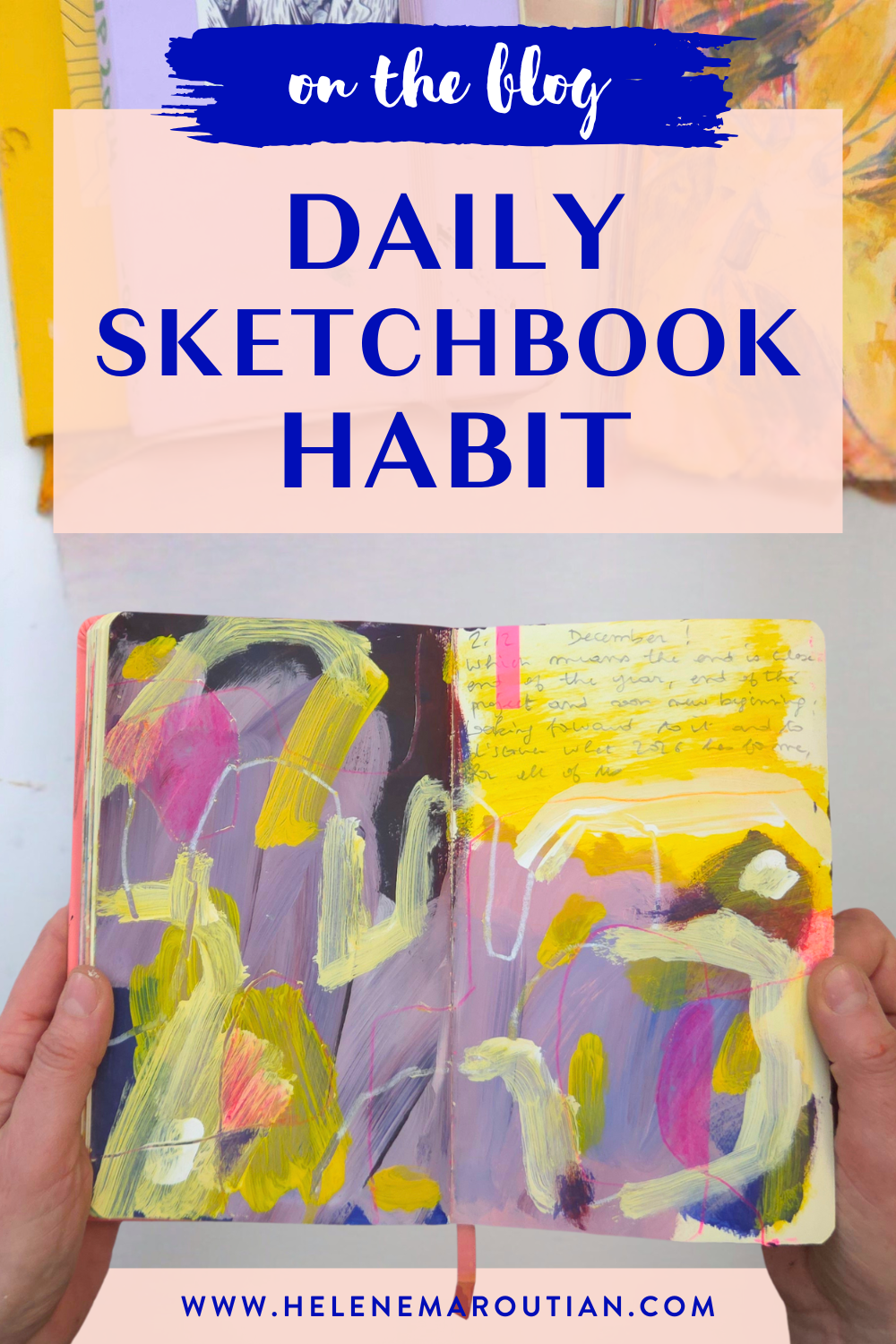
The daily pages I painted while working full time
For the past eight months I wasn’t in my studio.
But I wasn’t away from painting.
During this period I worked full time on a TV series project, and I knew I didn’t have the energy, the space, or the time for proper painting sessions. So instead of trying to force big paintings into a life where they didn’t fit, I changed the scale.
I made one small page a day.
That’s it.
The simplest possible art practice
Every evening, before going to bed, I filled one page in an A5 sketchbook.
Most days it took 3 to 5 minutes. Rarely more than 20.
No preparation.
No planning.
No big idea.
I just grabbed whatever was on my table — acrylic paint from my wet palette, crayons, collage paper — and filled the page.
An A5 sketchbook is important because it removes pressure. A big surface asks for decisions. A small page only asks for presence. You can start immediately, even when you are tired.
You also don’t need a fancy sketchbook. Only the practice matters.
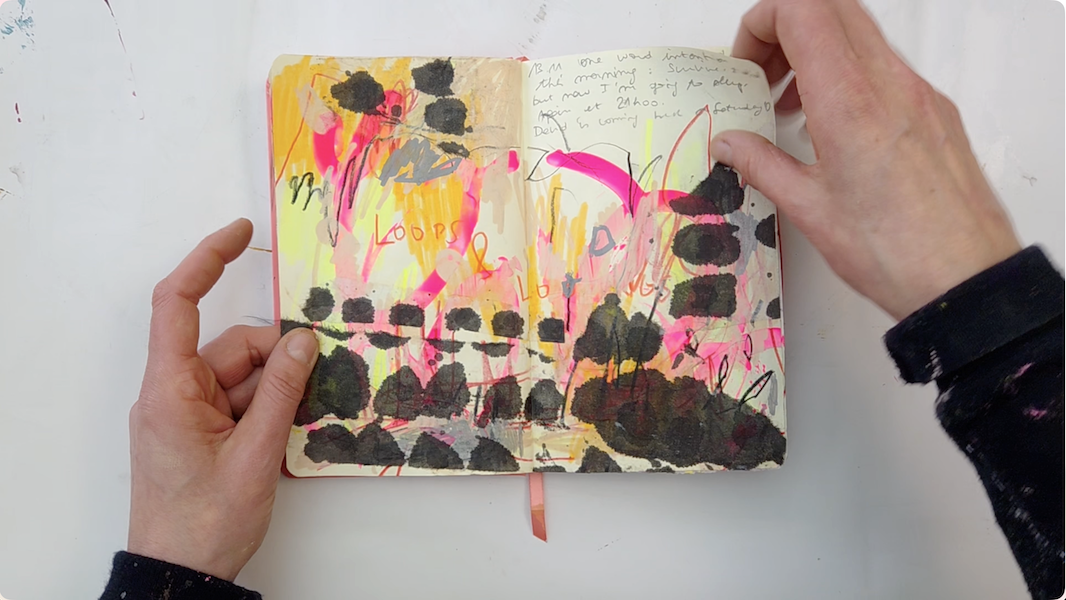
I rarely use black on canvas — but in the sketchbook, I do.
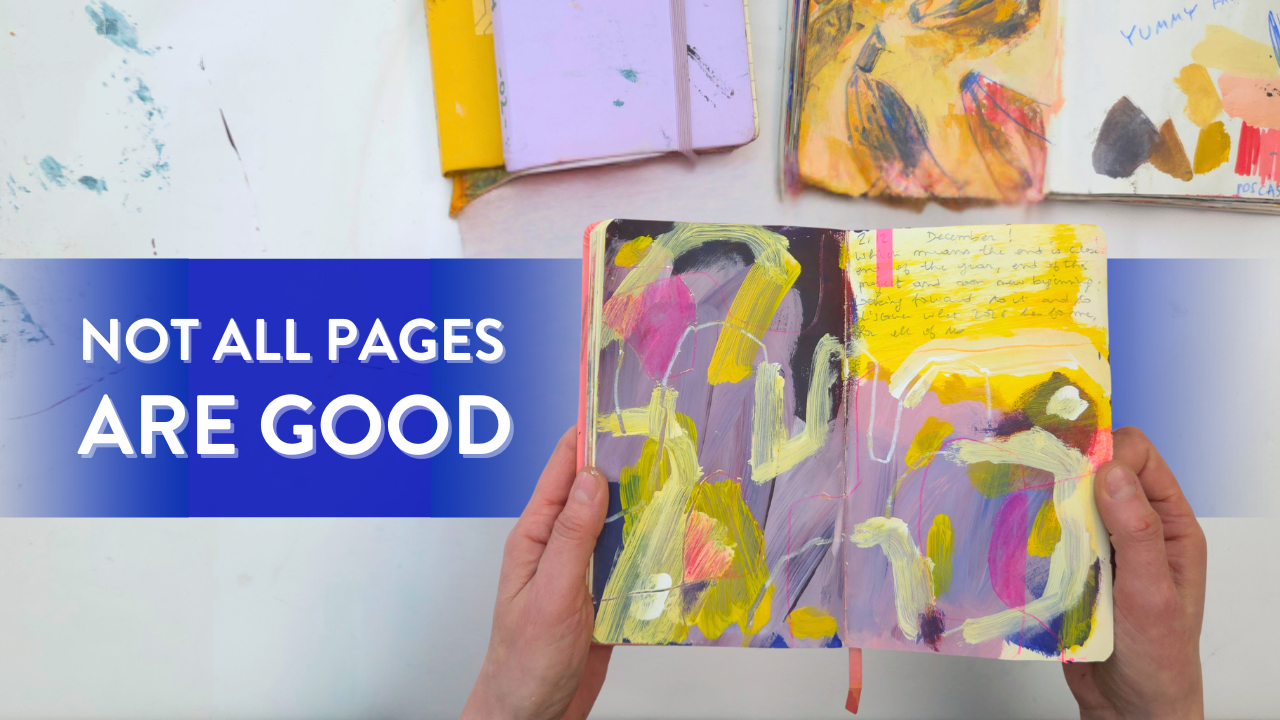
Not every page is good (and that’s the point)
Some pages are energetic. Some are soft and quiet. Some are messy. Some are honestly… not very nice.
But every page gives me something.
A colour combination. A nice mark. An interesting texture.
Or sometimes simply the confirmation of what I don’t like.
I try to take one takeaway per page. That’s enough.
And occasionally, a small idea grows into a finished painting later. Not because I planned it, just because the seed was planted here.
The real purpose is to empty the head and keep the hands moving.
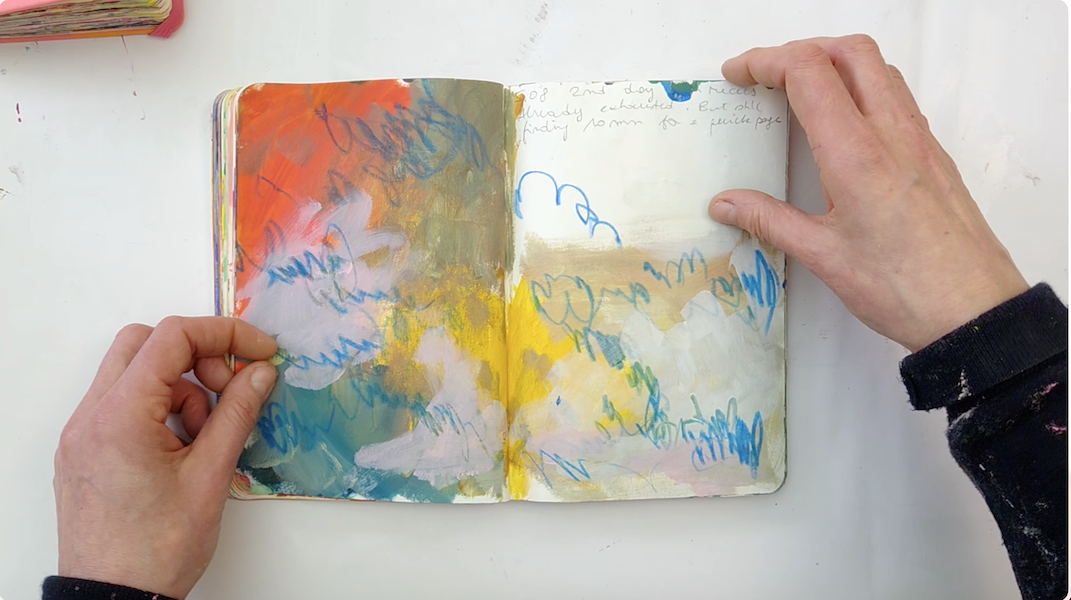
My takeway on this page = the blue scribblings
You start seeing yourself
After months of doing this, patterns appear. You discover how you naturally work.
For example, I noticed I almost always make vertical marks. I wasn’t aware of it until recently. Now I sometimes push myself to use horizontal marks, just to open new possibilities.
Some weeks the pages form little series: same colours, same rhythm, same mood.
Other weeks everything is chaotic. Both are useful.
You also learn something else: trying too hard often ruins the page. When I overwork it to make it “nice”, I usually lose what was interesting.
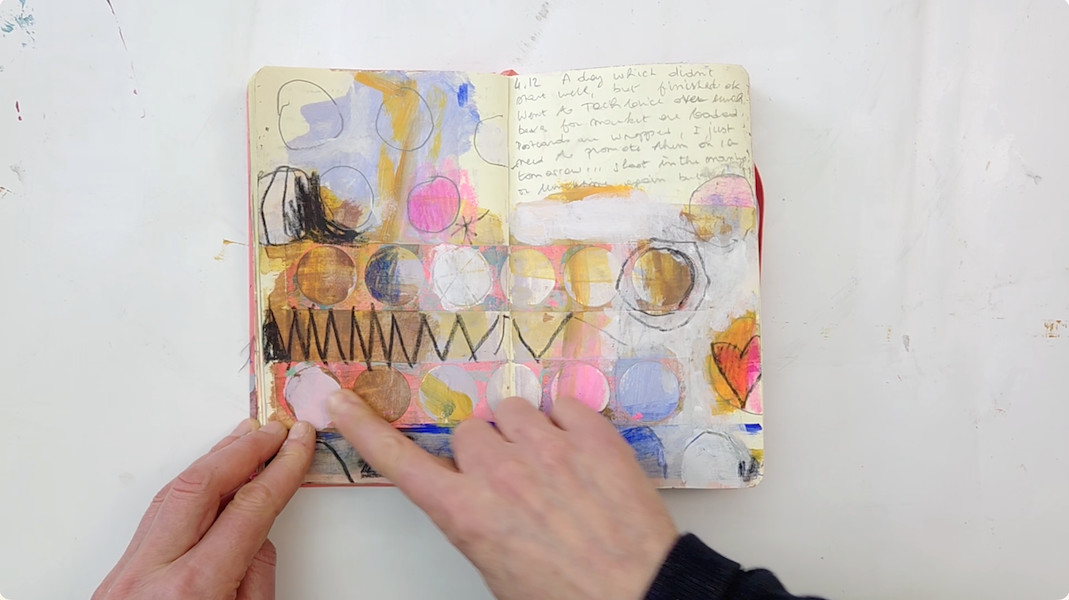
These pages taught me I have thing for polka dots
Why these pages became gold for me
These sketchbooks are not masterpieces. But they are extremely valuable.
They prove I can stay consistent even when I am tired, busy, frustrated, or uninspired.
I learn while making them, and I learn again later by revisiting them. When they are finished, I go through the pages and mark the ones that contain ideas worth exploring in larger paintings — colours, themes, compositions, patterns.
Sometimes only one or two pages in the whole book really stand out.
And that is already a huge success.
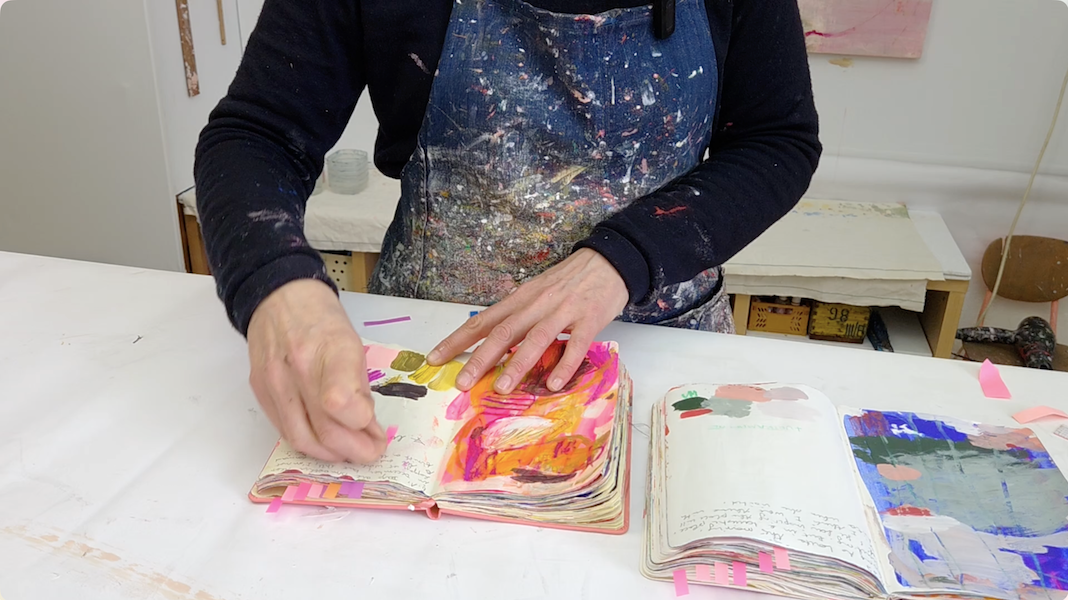
Curating the pages that deserve a closer look and deeper exploration.
You don’t need time, space, or perfection
This practice exists because I didn’t have a studio available in my daily life. I painted at home, in the evening, in short sessions.
Because short sessions stay sustainable. They don’t exhaust you. They don’t require motivation. They only require showing up.
If you want to try:
take a small sketchbook
pick one colour
make one mark
close the book
repeat tomorrow
That counts.
Skip a day? Fine. Start again the next day.
If you repeat this, you will improve. Not magically, but inevitably. Drawing, colour mixing, composition — all of it grows because your hand and eye keep meeting regularly.
Something always comes out of it.
I’d love to know if you already make daily pages, or if this makes you want to start.
In the next article and video, I’ll share the beginning of a new series of paintings around palm trees and exotic plants, and you’ll see how this quiet daily practice supports the bigger studio work behind the scenes. 🌴
If you enjoy practical studio tips like this one, you’ll probably like what I share on YouTube and in my newsletter, it’s where I document the real, messy, ongoing process: