Starting a painting series (and why I don’t begin with a canvas)
Starting a painting is often the hardest part. Not the technique, not the materials — just… how to begin.
I’ve just started a new series of paintings about palm trees.
I didn’t suddenly became a plant specialist, but I needed a clear way back into painting without freezing in front of a blank canvas.
After some time away, I came back with a real urge to paint — and too many ideas. The kind of moment where you could start three paintings in one day and none of them would go very far.
So instead of forcing a canvas, I decided to change the beginning.
Why I chose palm trees for a painting series
I had painted two recently and felt I wasn’t finished with them.
The shapes stayed with me, and it’s a subject that keeps appearing in my paintings.
Palm trees are funny subjects. They are very clear, everybody recognises one immediately, but they are never the same. The leaves, the rhythm, the way they grow from the trunk… each one has its own personality.
It felt perfect for a series — a direction without being locked in. I don’t want something rigid. I want it to stay alive and move as I work.
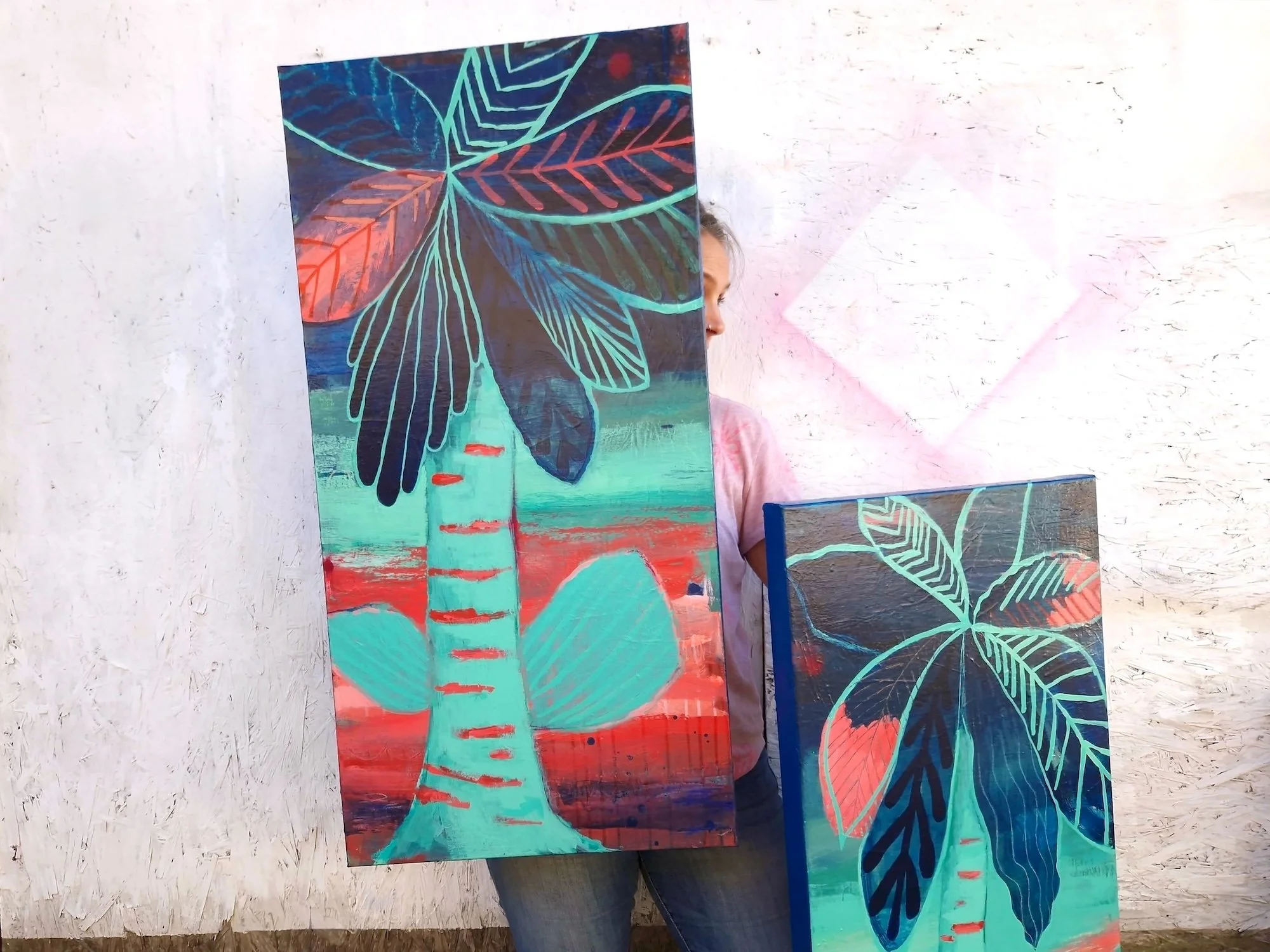
The two earlier paintings that sparked this new series — I kept coming back to them without really knowing why.
What I use as references before painting
Before painting anything, I gathered material.
I kept a small sketchbook at my desk while working full-time and drew palm trees whenever I could. Then I went to the botanical garden — where I ended up drawing many other plants too, which already told me something about the project.
I also collected travel photos, Pinterest images and botanical books.
But very quickly I realised I prefer working from my sketches.
A photo shows everything. A drawing shows what I noticed.
When I draw, I simplify. I choose. The sketch already filters reality, and that makes it much more useful when starting paintings.
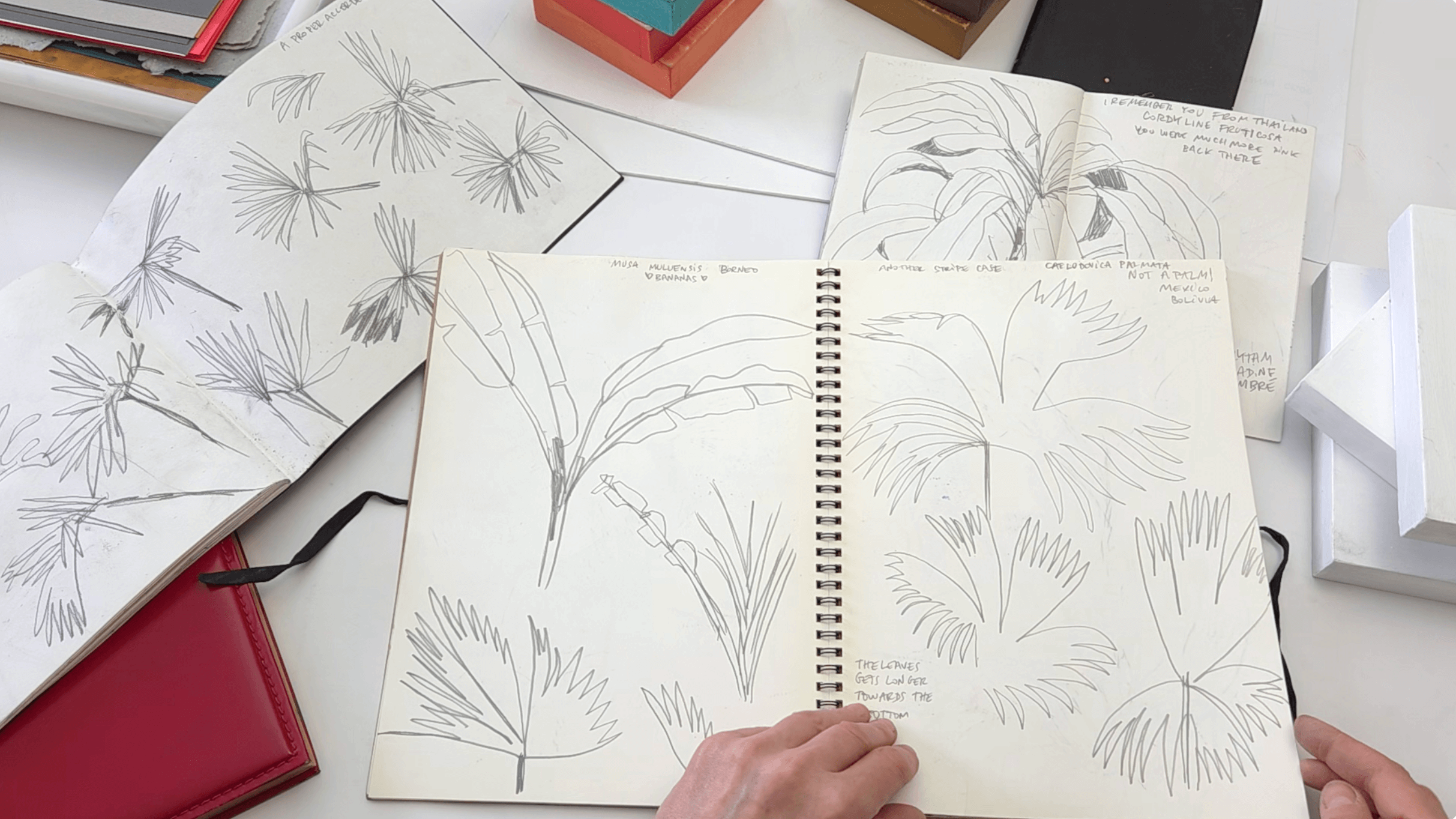
Sketchbooks from the botanical garden. I rarely start with a plan — I just draw until something begins to repeat.
Why I start in black and white before painting
For this series, before touching a canvas, I decided to warm up.
Sketchbooks, loose sheets, charcoal, ink. Many pages — some good, some ugly, some confusing.
This stage is not about making nice drawings.
It’s about reconnecting the eye and the hand.
Without colour you can’t rely on pretty combinations, you go to the essential. You have to look at structure: how leaves grow, how they attach, how a plant tries to occupy the page.
I’m not training to draw better. I’m training to see better.
And after a while even the brushes relax. Once they’ve been loaded and unloaded enough times, they behave differently. And so do I!
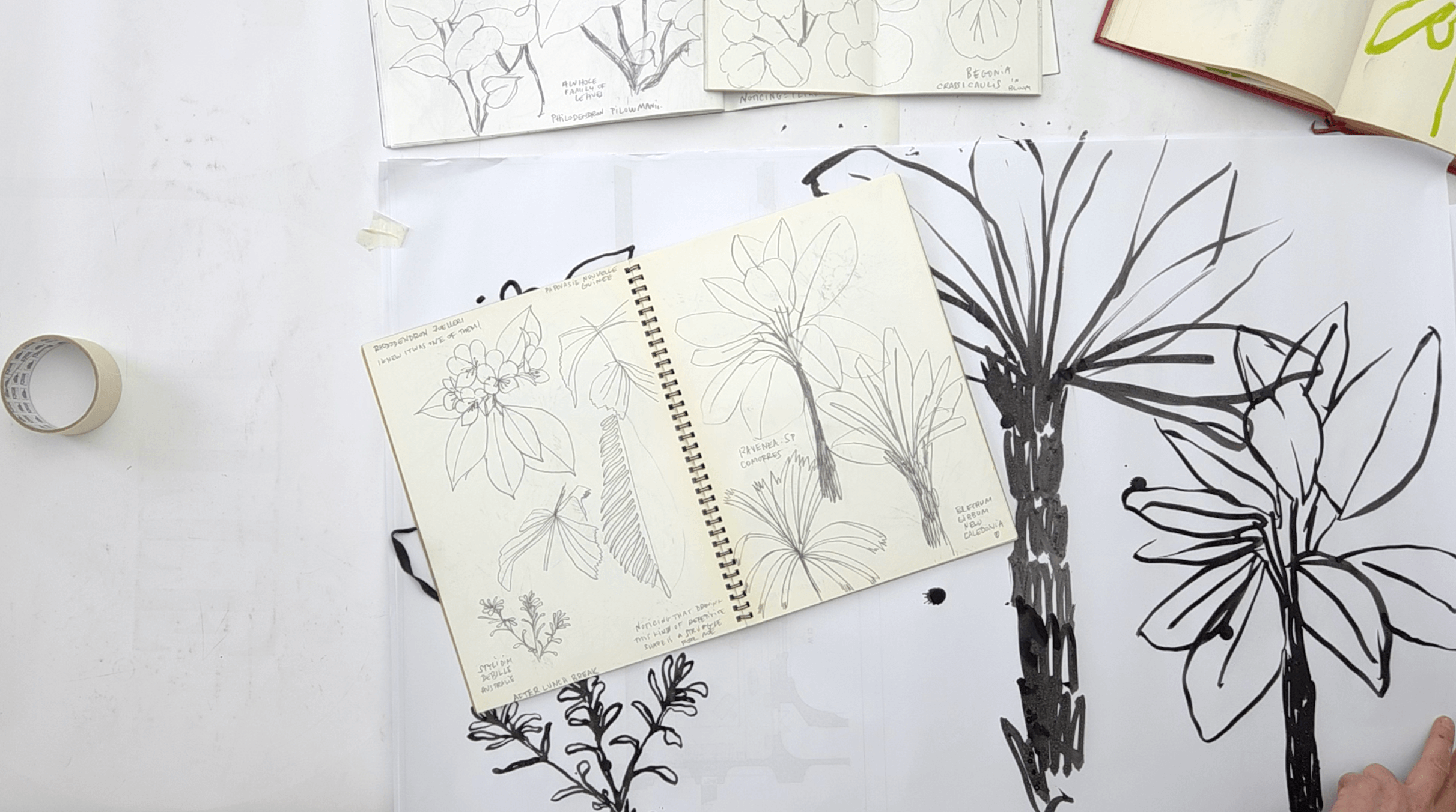
When a drawing insists a little too much, I scale it up. Same subject, but now the body has to move.
Allowing the project to change
At the botanical garden I didn’t draw only palm trees. I noticed it only later — I was simply absorbed and stayed until closing time.
I think that helped.
If I control everything too early, the series becomes rigid. I don’t want to execute a plan. I want to follow an idea and see where it leads. A good adventure needs a few detours.
I don’t know what the final paintings will look like.
That’s the interesting part.
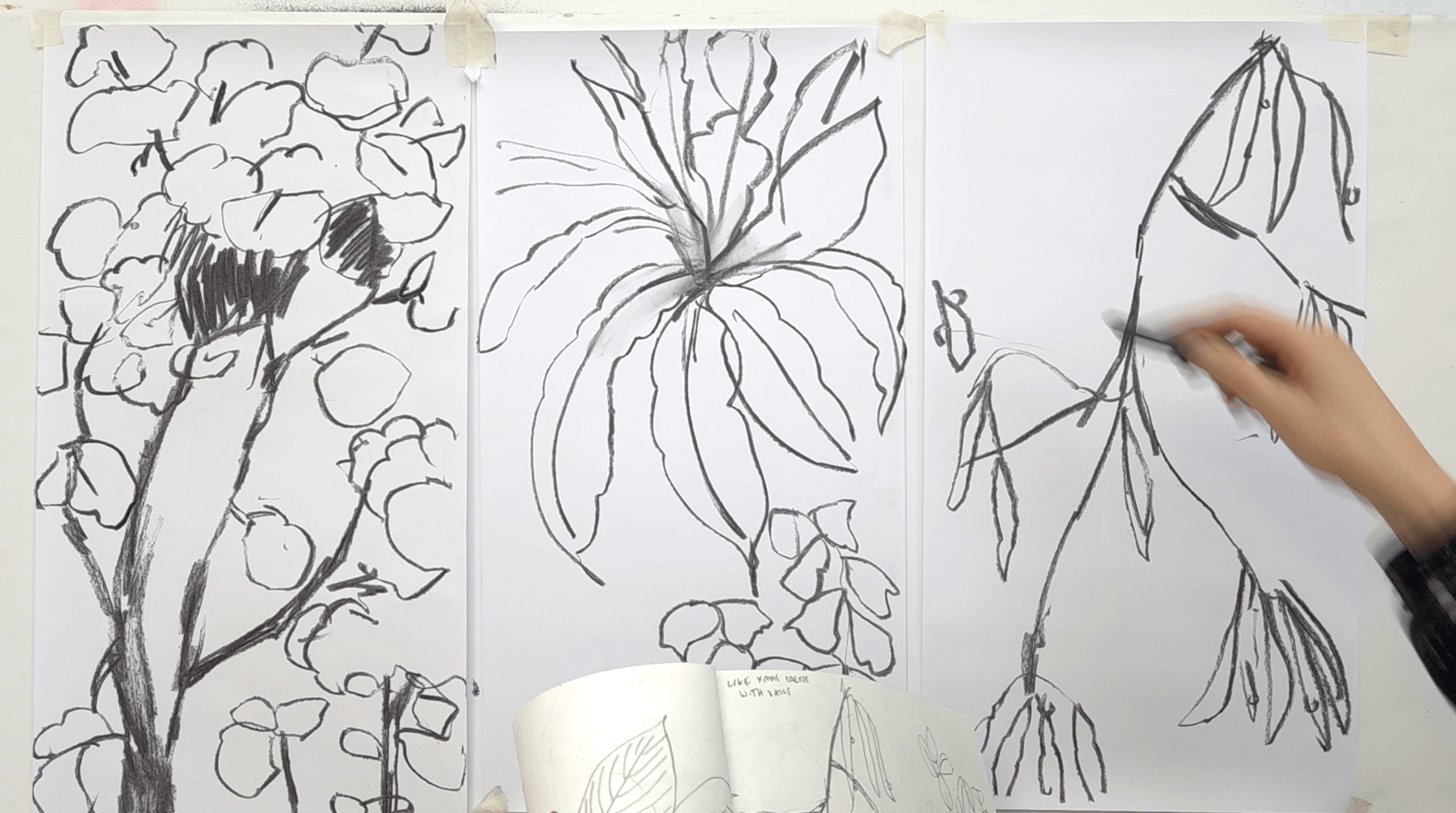
Drawing standing up changes everything — the arm thinks differently than the wrist.
When the series actually begins
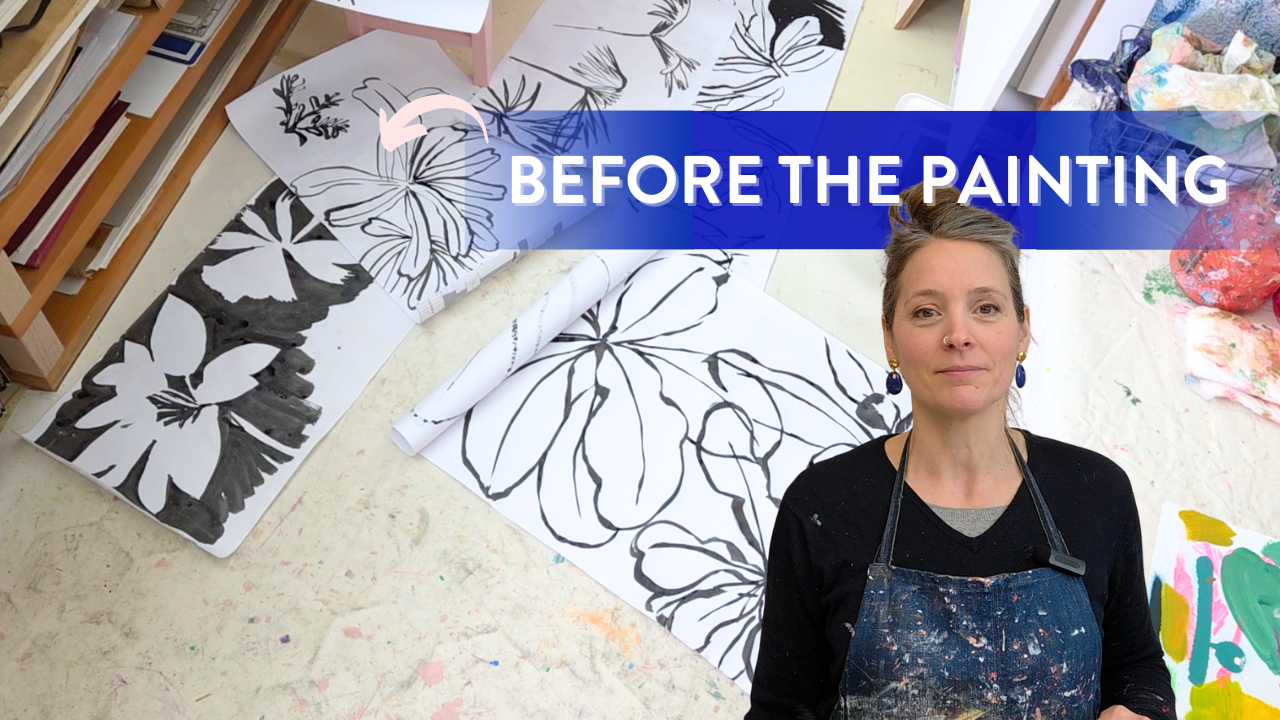
After each drawing session I spread all the pages on around the room.
This is the real starting point.
You begin to see repetitions, rhythms, compositions, recurring shapes. Some drawings have energy, others don’t. Some might become references for paintings, some will never be used — and that’s perfectly fine.
The series doesn’t start with the first canvas.
It starts with learning to notice.
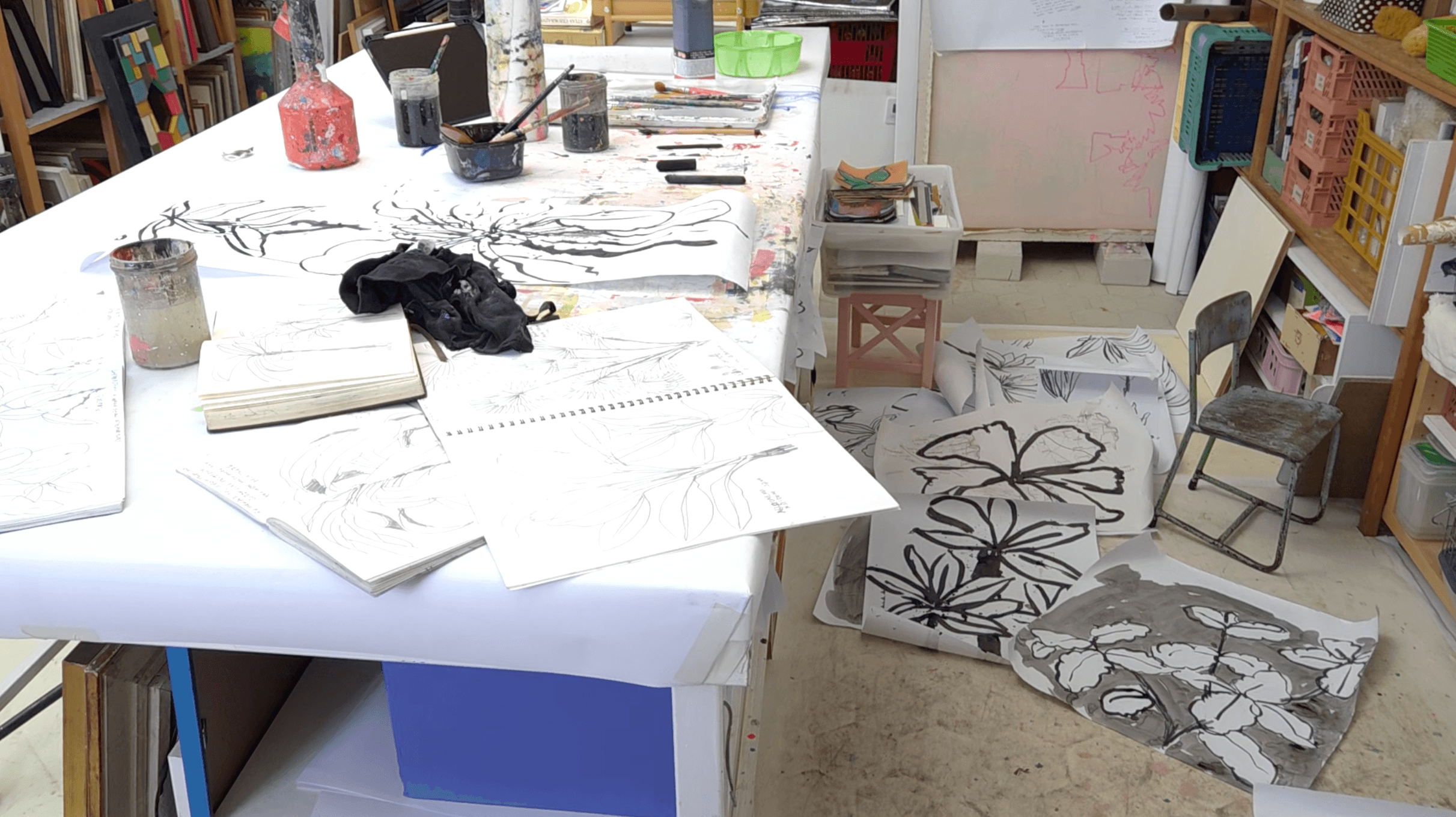
The stage nobody posts. This is usually when I know something interesting happened.
Next step: introducing colour
Black and white helped me connect with the subject and with the space.
Now I’m ready to introduce colour and see what can grow from these studies.
I honestly don’t know yet where this will go, and that’s exactly why I want to follow it.
The next part will be about the colour studies.