
Beyond the blank canvas: the art of using vintage surfaces
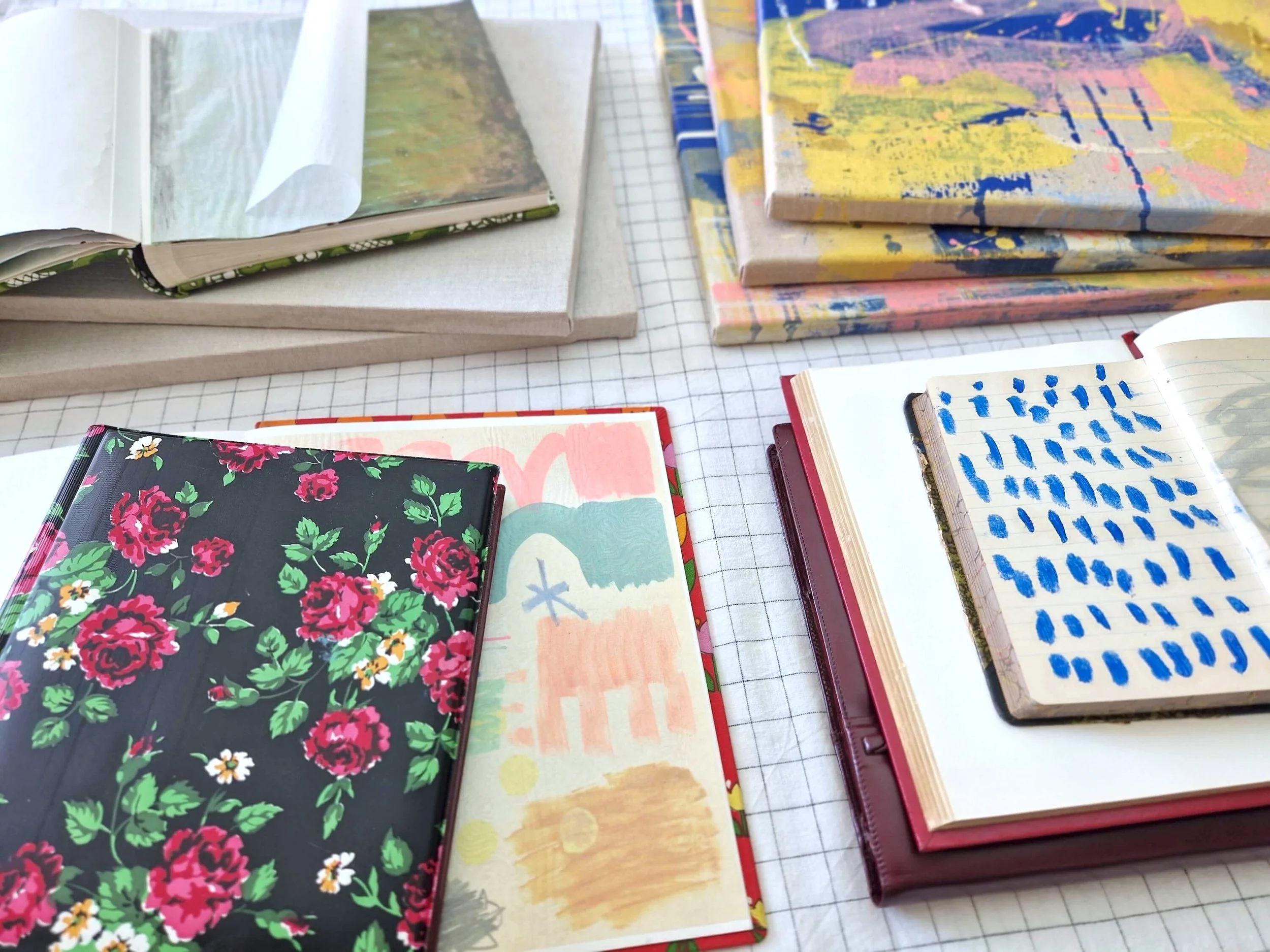
Ever wondered how vintage surfaces can transform your art?
Discover how repurposing these unique finds can spark new creativity.
Beyond the tools themselves, the substrates you use can also contribute to the unique character of your artwork. Exploring second-hand options adds another layer of history and texture to your creations.
Keeping an open mind is key. Sometimes the best finds are the ones you weren't even looking for! With a keen eye and a roomy bag, these havens for pre-loved items offer a potential goldmine of art supplies just waiting for a new creative life.
Sketchbooks
Keep an eye out for older stock sketchbooks when thrifting. These can be a great bargain and offer a unique, sometimes worn-in, feel for your artwork.
Beyond sketchbooks, look out for vintage notebooks, phone books, ledgers, and various paper pads. These offer a unique range of textures and styles perfect for collage. Some artists even use them for sketching, creating a one-of-a-kind drawing surface, and potentially overcoming the fear of the blank page.
The truly lucky find? Leather-bound guestbooks, exuding a touch of vintage luxury.
I once found five identical unused vintage guestbooks! With their luxurious leather covers and beautiful ivory pages, they make perfect art journal and accept wet techniques as well.

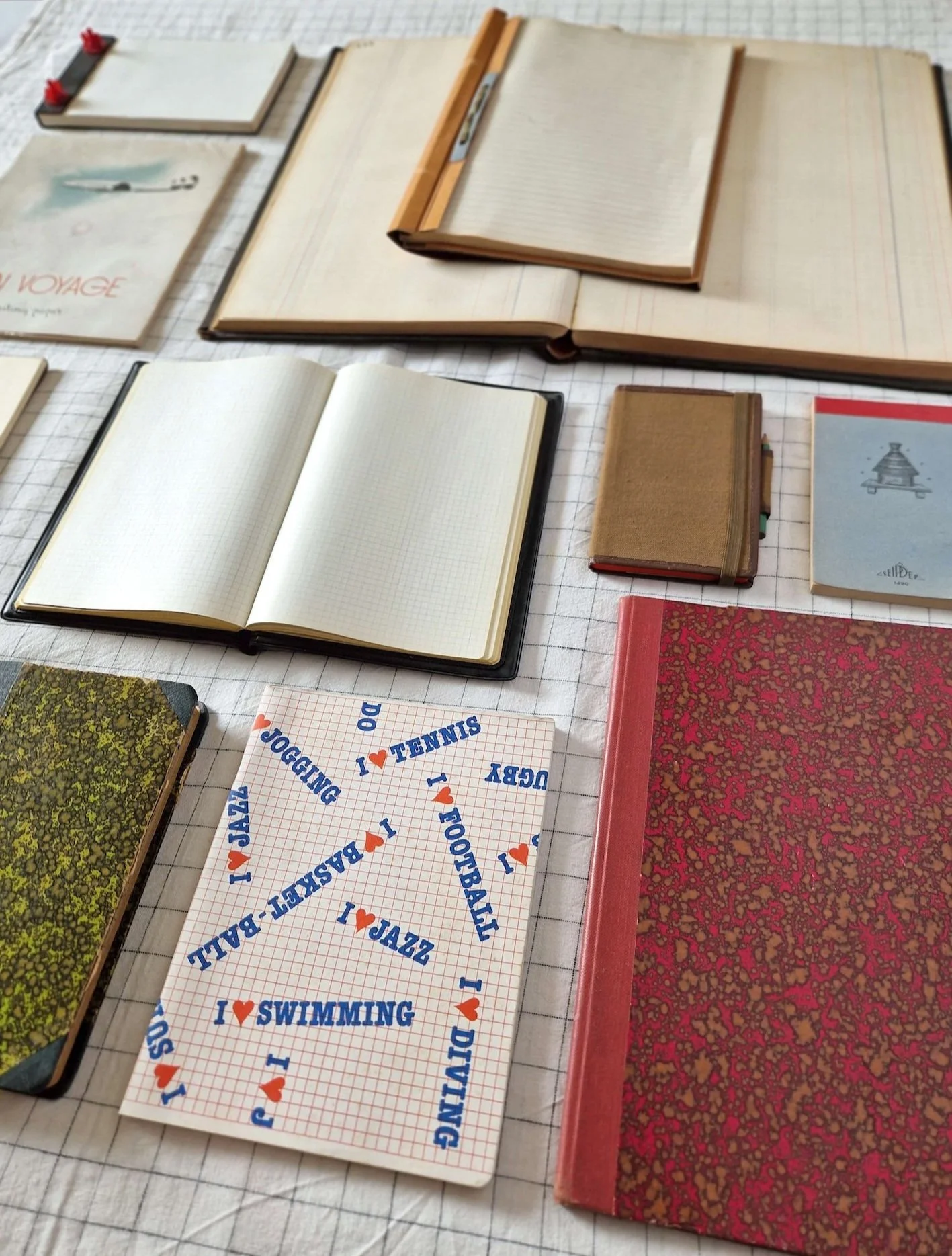
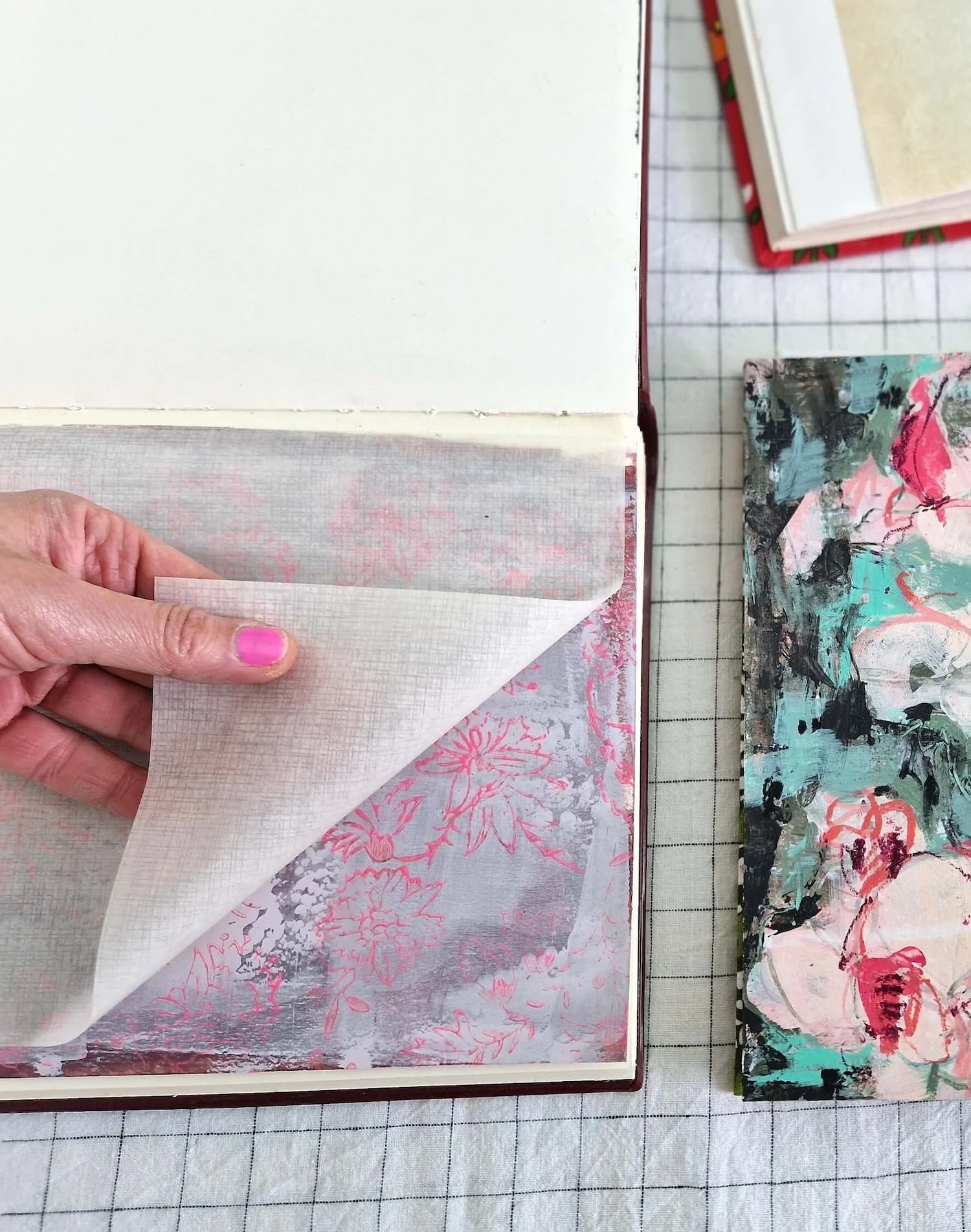

A glimpse into my vintage collection: some of the unique paper treasures I've found while thrifting.
Re-purposed photo albums
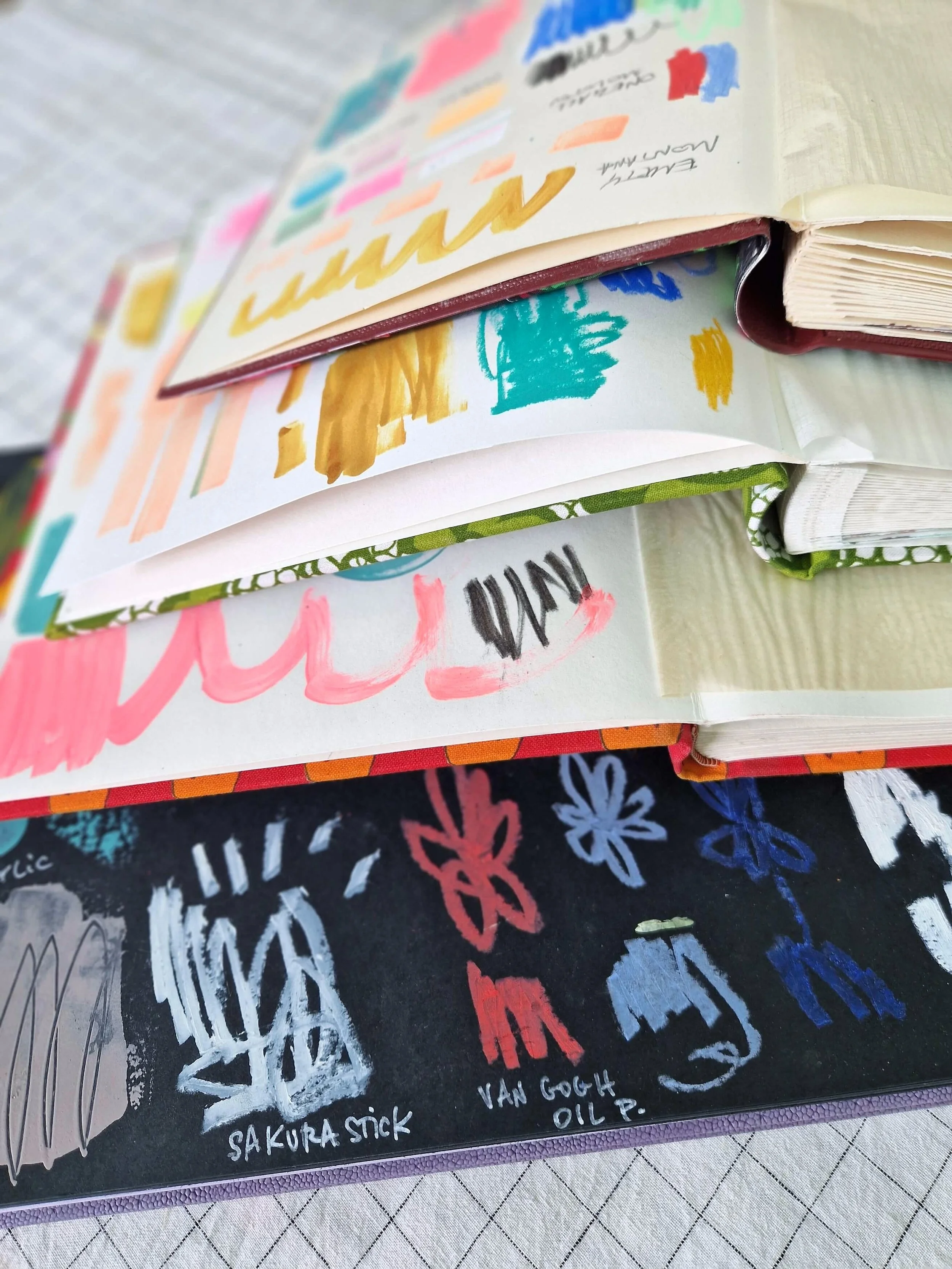
Unused or minimally filled retro photo albums can be transformed into fantastic sketchbooks with thick paper pages! Simply remove any unnecessary pages or photos and enjoy the benefits of the sturdy cover.
The best ones are those with glassine paper separating the pages, this will prevent sticking and smearing if you use pastels or charcoal in your sketches. I have to admit it’s not a common find, so when you do discover one, don’t miss it!!
I can't resist the eye-catching charm of 1970s patterned covers. They are quite unique pieces, so it can be a bit intimidating to start covering the pages with your marks. However, they are cheaper than an equivalent size and paperweight sketchbook from the art store so there’s nothing to lose by experimenting on these pages.
Pro tip : Start with a test on the last page to check media compatibility before diving in.


Canvas alternative
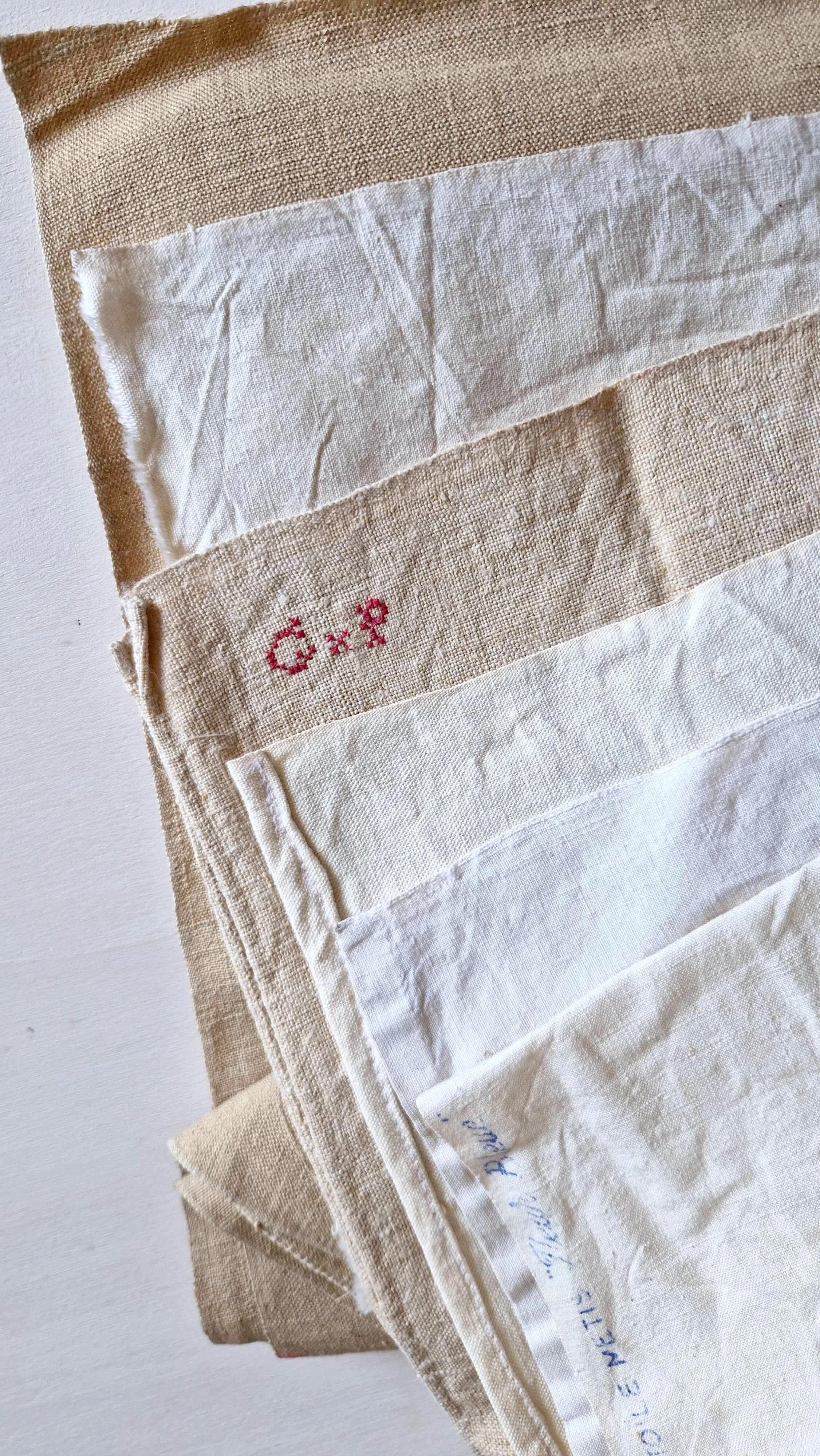
High-quality canvas can be a significant investment, and finding affordable alternatives can feel like a never-ending quest. However, flea markets and antique stores offer a unique solution: vintage sheets! Look for linen or hemp, ideally, as well as thick cotton or a mix of these materials, ensuring they are unused and in perfect condition.
Before stretching your entire sheet, it's important to test a small sample to ensure compatibility with your chosen mediums.
Then comes the exciting part: experimentation! Stretch your antique linens on sturdy, new stretcher bars to create a unique and textured canvas. It's important to note that antique linens might require some preparation before use, such as washing and priming.
However, even though the unique nature of vintage fabrics might initially feel intimidating, the potential rewards in terms of cost-effectiveness and artistic expression make it a worthwhile experiment for adventurous artists!
This article is a nudge to myself (and anyone else who needs to hear it) – stop hoarding supplies and start creating! Who knows what unique and beautiful pieces you might create by embracing this alternative canvas option?

A fresh perspective
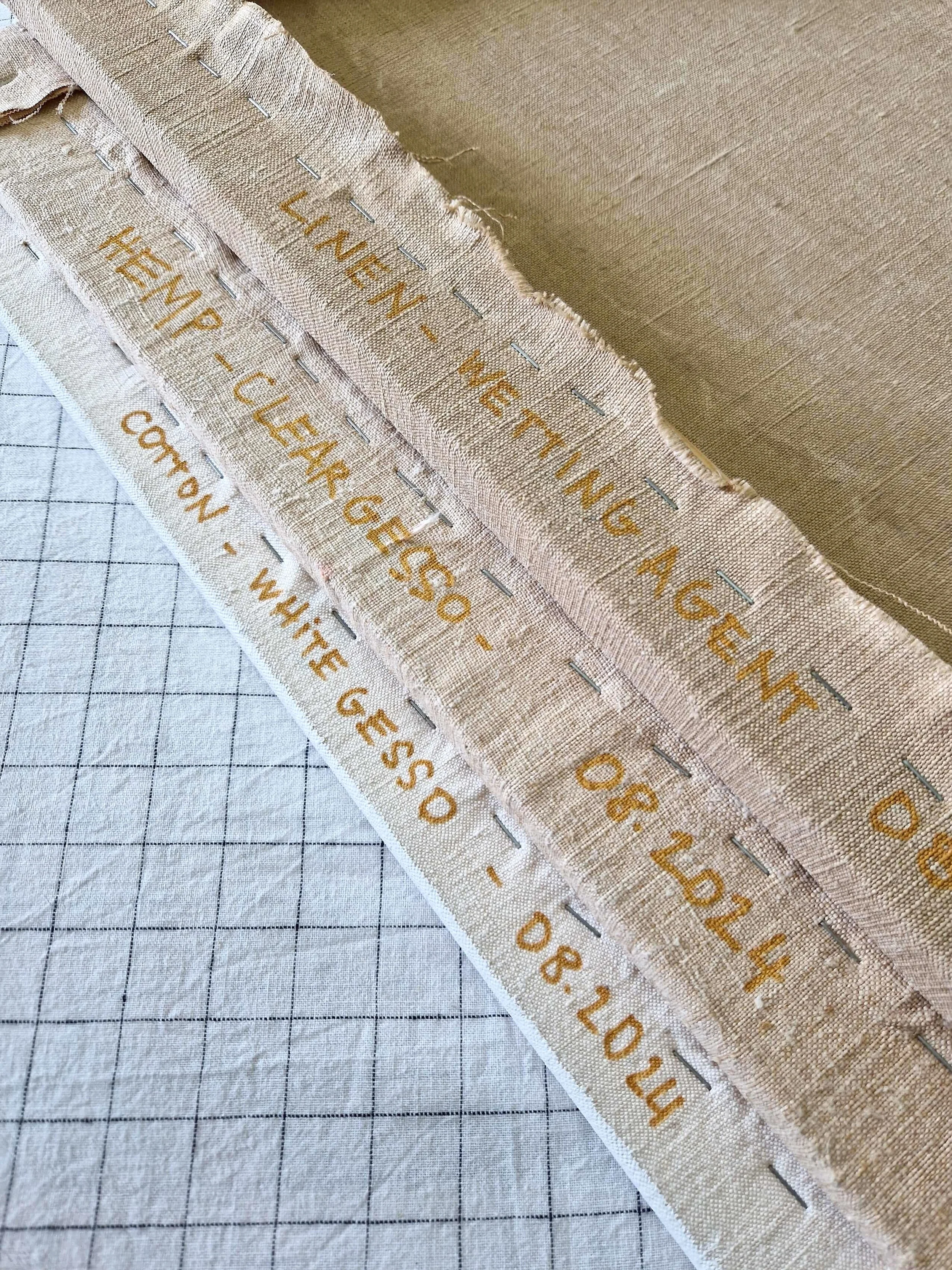
I'm just at the beginning of working with vintage fabrics, and I’ve found that I don’t approach this type of surface the same way I do plywood or store-bought canvases.
The quality of these vintage surfaces creates such beautiful textures and opens up a whole new level of possibilities. It’s almost intimidating—there’s so much depth to explore, and I feel like I won’t have enough of a lifetime to dive into it fully.
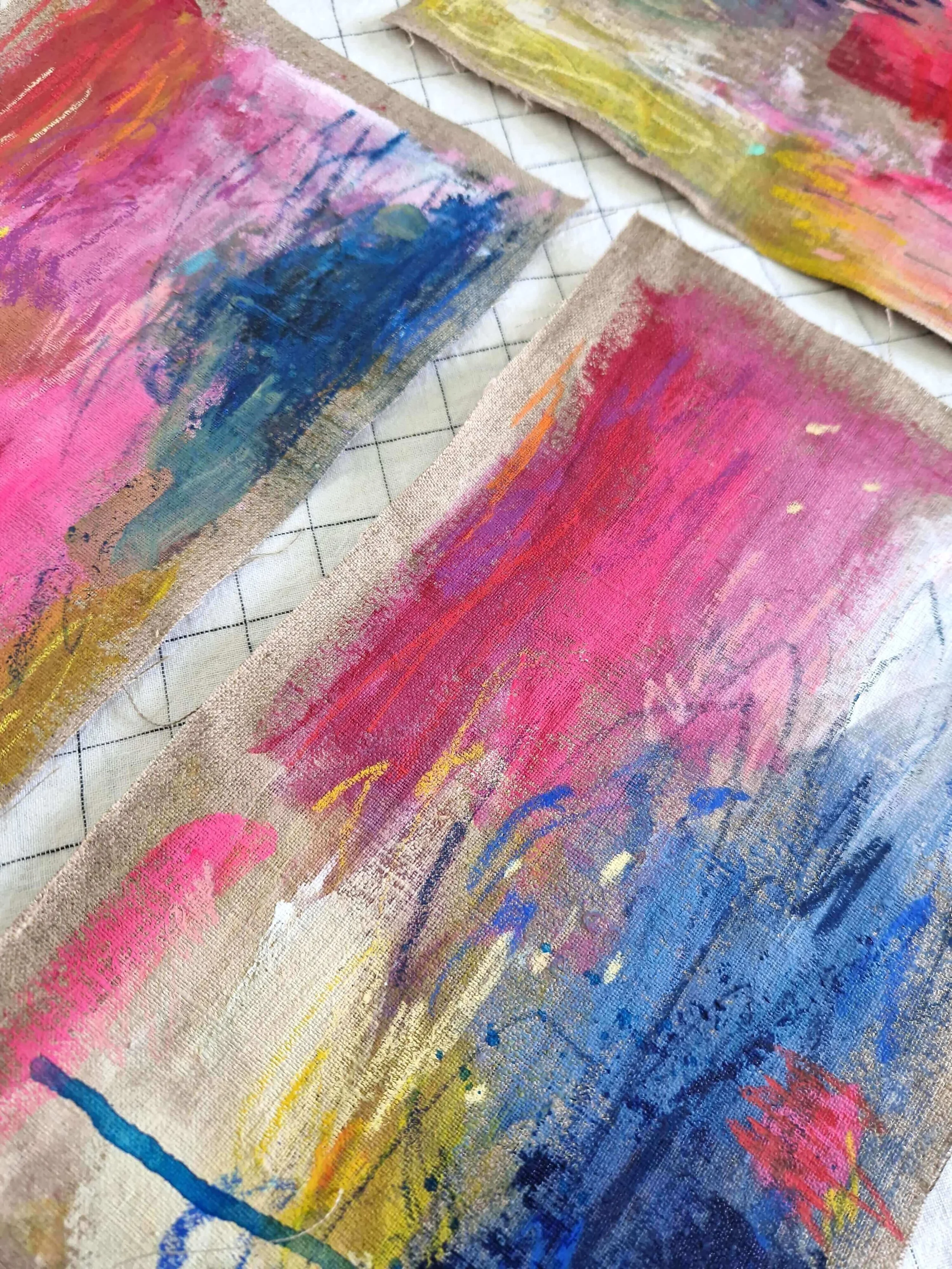
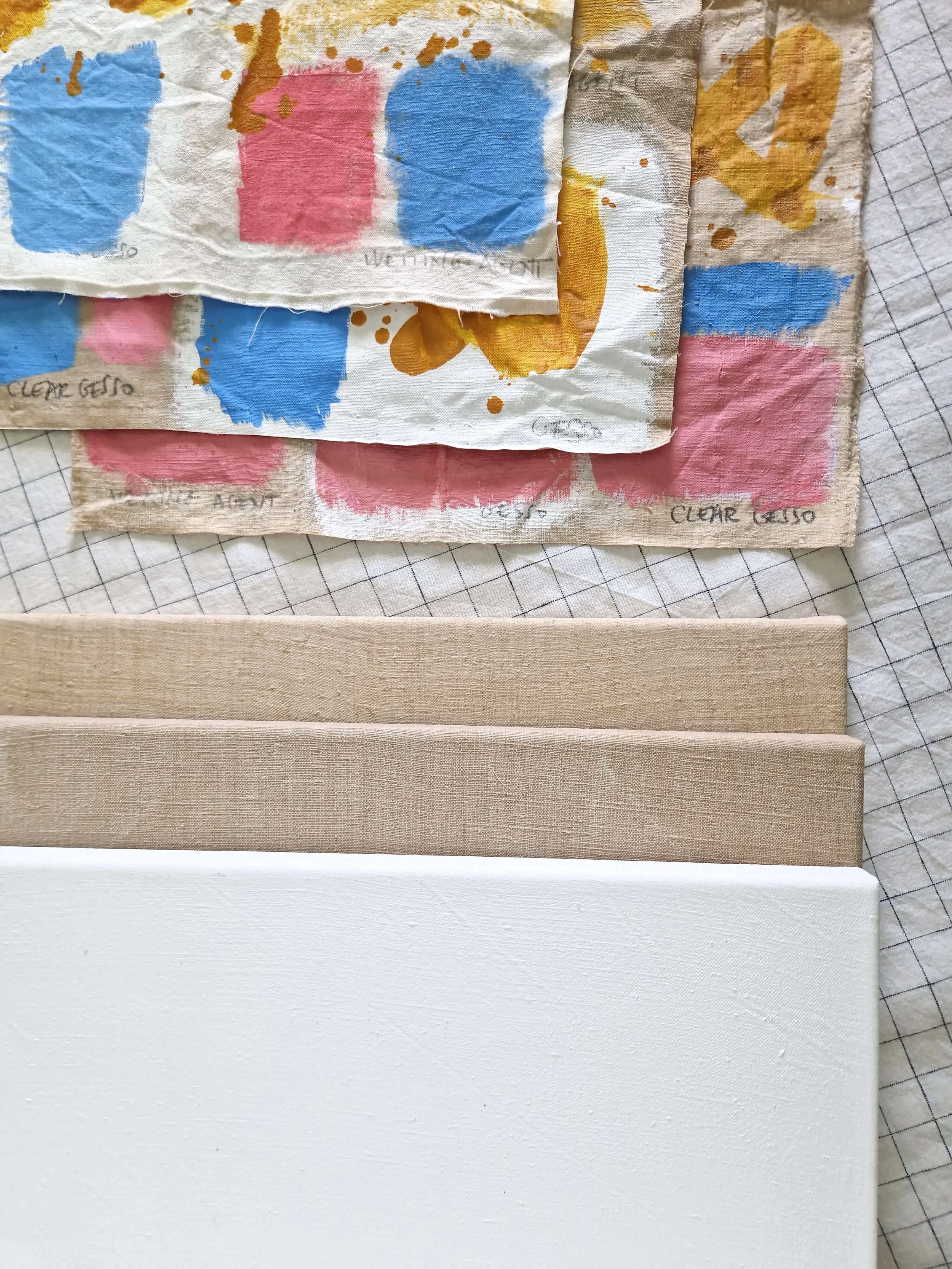
For the purpose of writing this article, I tried three different types of canvases, each with its own preparation method. Just these elements, combined in various ways, could keep me creatively engaged for the next year!
The textures, colours, and character of each canvas inspire me to experiment further and discover new techniques.
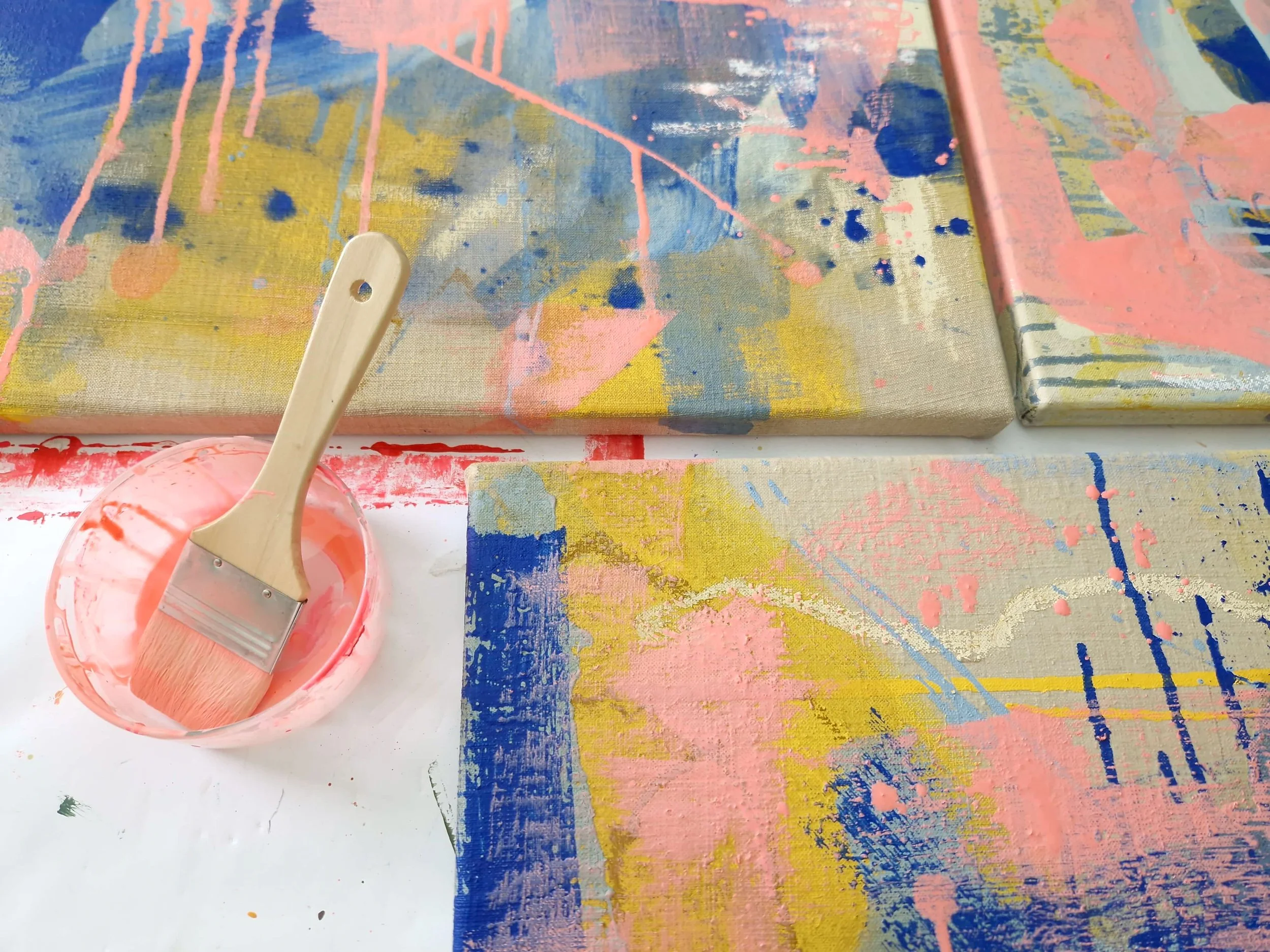
Latest addition to these canvases, some deliciously liquid pink
…Update…
When I first wrote this article, the paintings were still in progress. Now they’re finished. Along the way they picked up a summer twist, full of beach vibes and a slightly vintage mood.
Here they are in my e-shop: Rêves Salés, Castles Made of Sand, and Sun-Kissed.
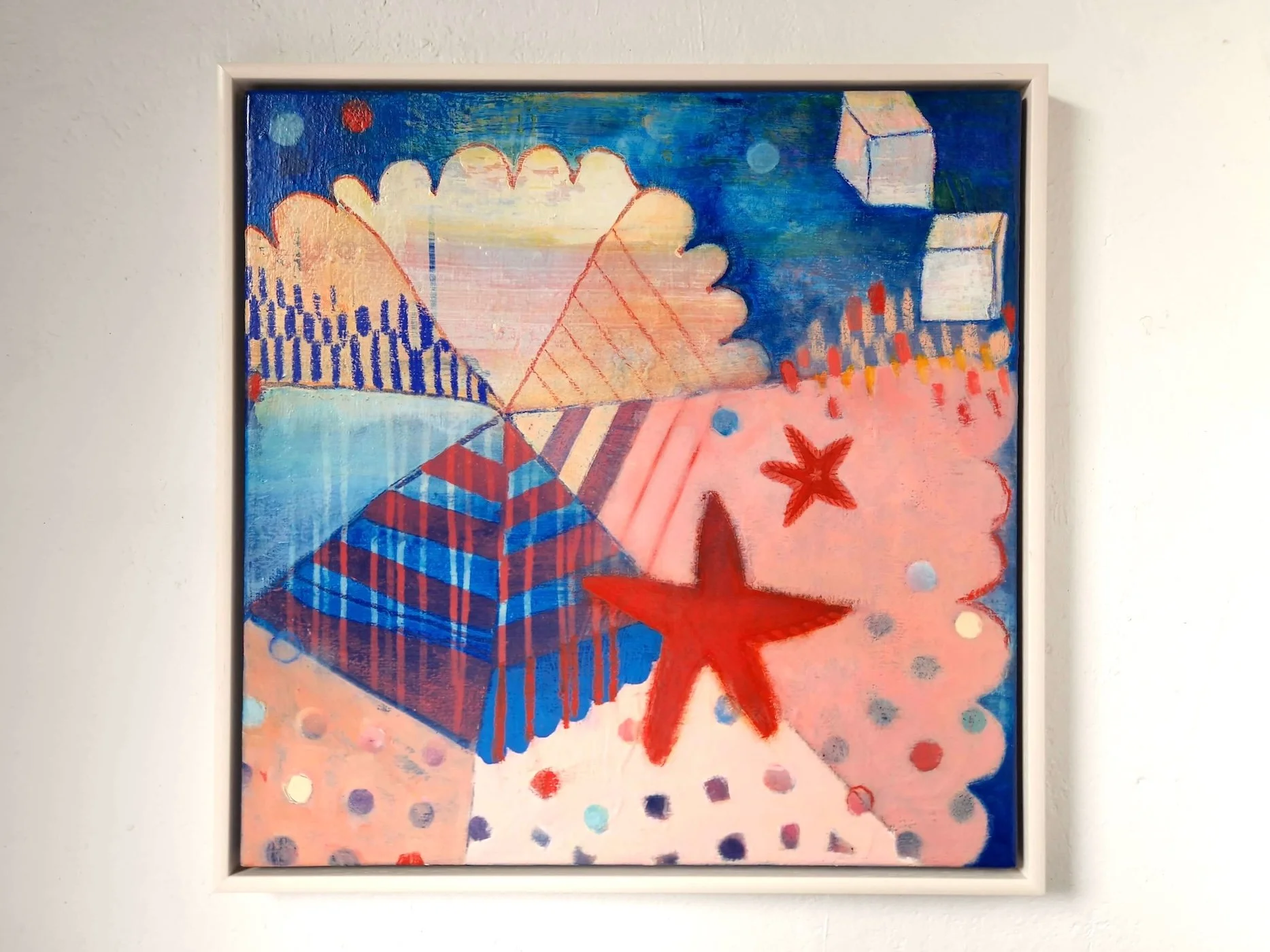
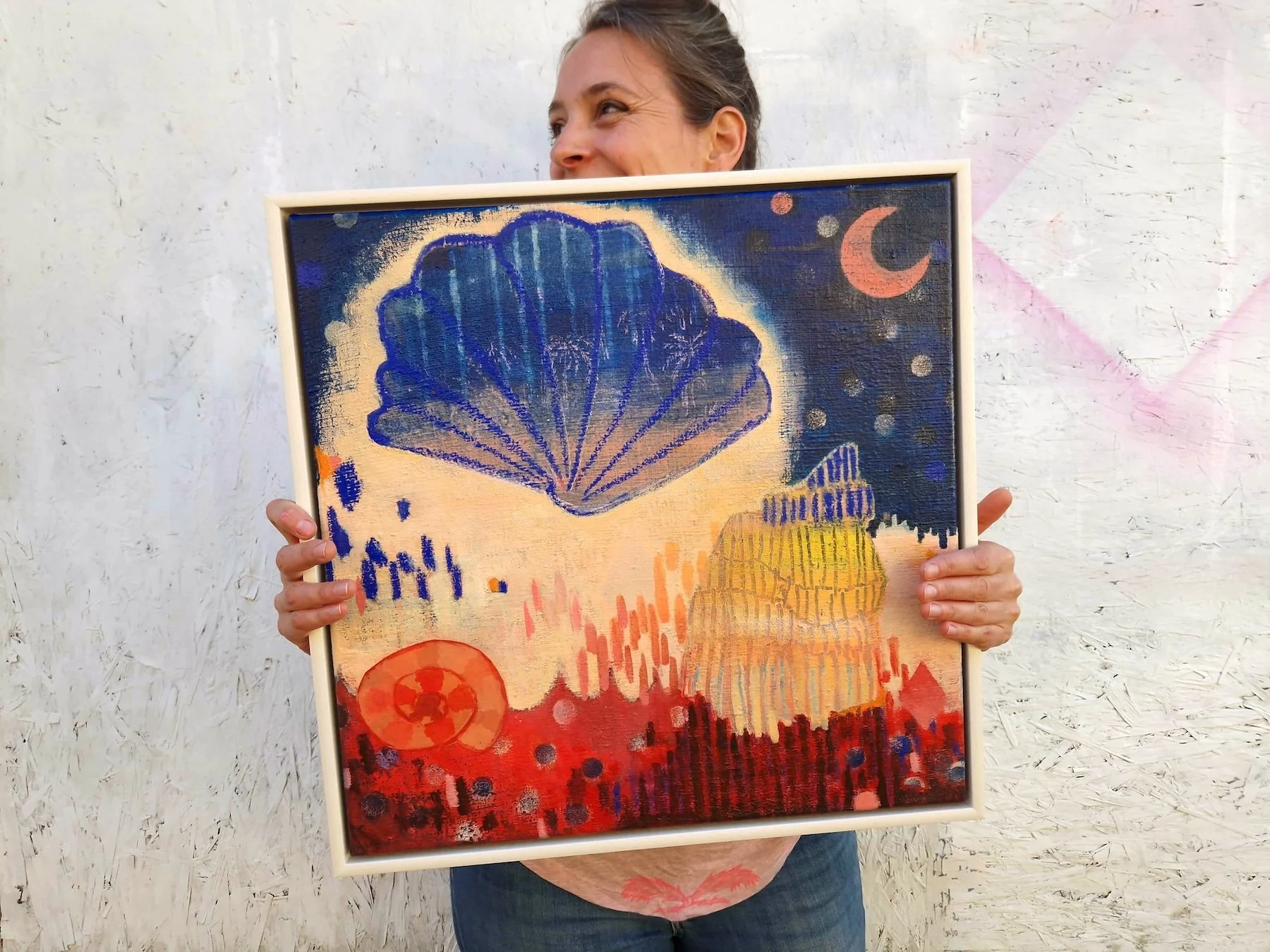
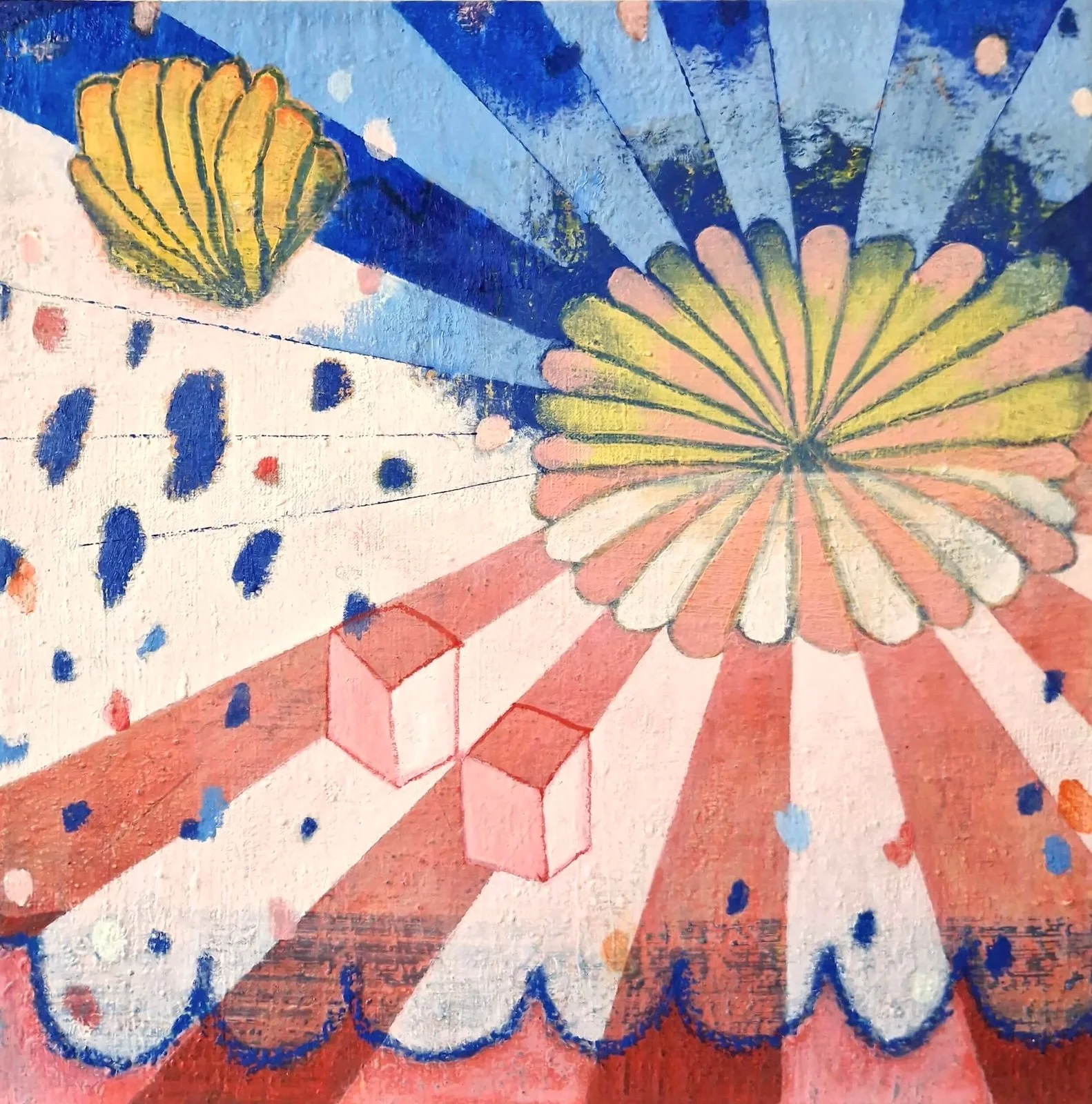
What unique vintage surfaces have you incorporated into your artwork? I’d like to hear about it, share your stories in the comments below!
I my next article, we’ll explore how to organize your studio with vintage charm, turning repurposed items into stylish and functional storage solutions…
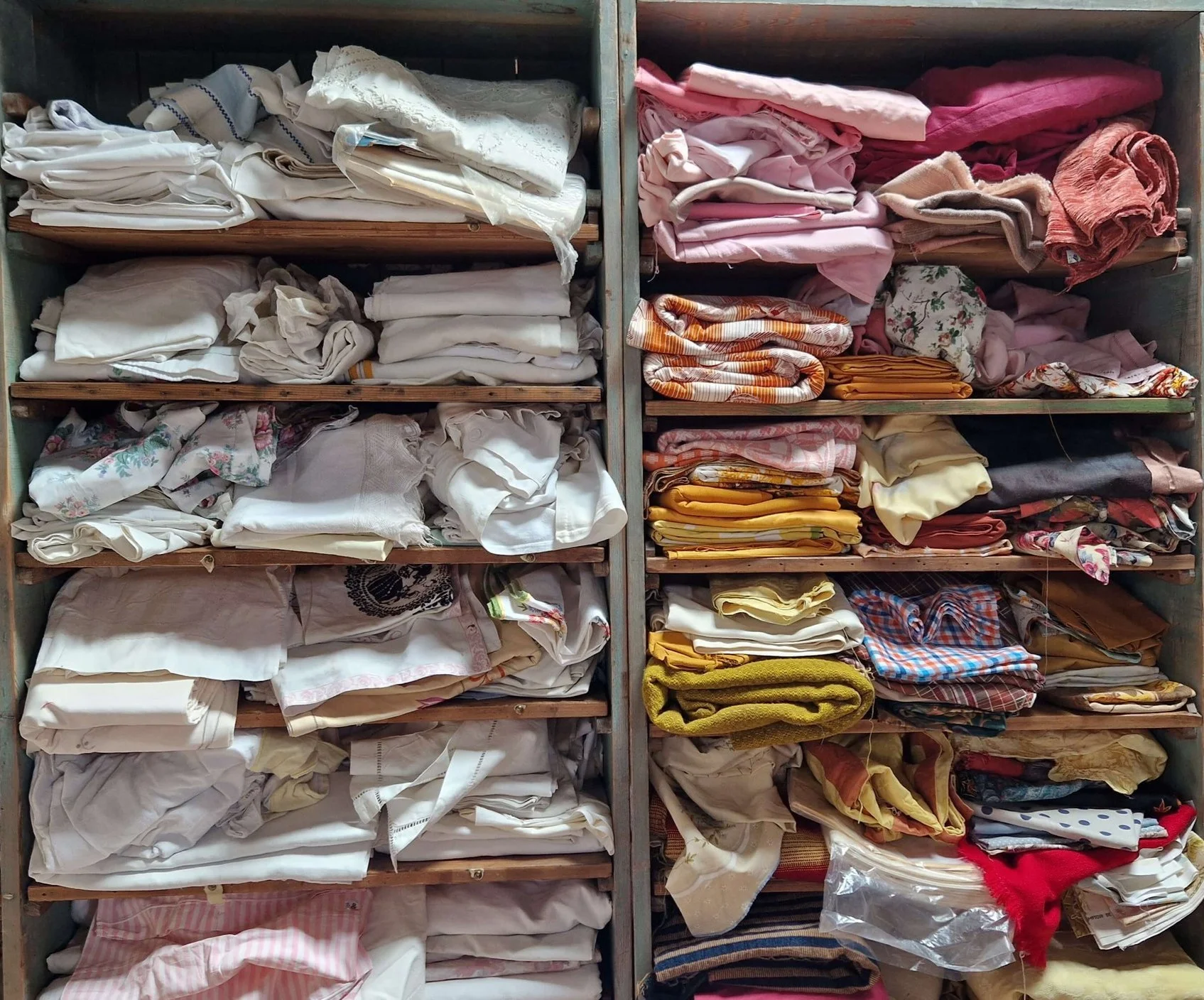
Searching through this type of pile can feel intimidating or discouraging, but that's where the treasures are hiding!
