
Behind the booth: What I learned from my first art fair

A leap into the unknown
I found out about the Prague Open Art Fest too late last year to participate, so I was probably one of the first to subscribe for the 2025 edition, I jumped on the opportunity as soon as it opened.
I started preparing seriously, with a retro-planning about six months ahead and a few paintings already in progress. Back then, it felt like plenty of time. Fully motivated and very excited, I didn’t even consider the possibility of being late or wrong.
Preparing while working full-time
Going back to my full-time job in June left me with only four months to prepare, and just evenings and a few weekends to paint. It still felt manageable at first; for some artists, that’s probably more than enough. But I’m not a fast painter. My process is layered and slow, and every piece takes time to unfold.
I stayed consistent at first, painting in the quiet of late summer nights, but it soon became difficult to balance both worlds. Luckily, my job is only twenty minutes from my studio, so I sometimes dashed there during lunch breaks to varnish or seal a piece. These little steps helped me save time.
My retro-planning really kept me on track. When, one month before the fair, my calendar said “All paintings completed by now,” I took it as a personal challenge to finish the three still waiting on my table.
The final countdown
I framed the last piece just one week before the fair, something I would never have imagined when I started preparing! I thought my super planning guaranteed success. But now I realise that while a plan is essential, you also need to leave space for the unexpected, which I didn’t.
The last few weeks were intense, and the fair was constantly on my mind, sometimes more than my day job. By the evening I arrived to install my booth, I was already exhausted.


Setting up – From empty walls to a colourful universe
Thankfully, my partner insisted on helping me, and wow, I’m glad he did.
I thought my job as a set decorator made me an “art fair booth pro.” I had a printed mock-up, all the tools, perfect labels… yet we were still being chased out by security when the hall closed, and I had to finish setting up the next morning!
What looked good on paper needed real-life adjustments. The hanging system was a bit DIY (even the organisers warned us). I couldn’t accept crooked or uneven paintings, so I spent extra time fixing every detail.
In the end, it looked great. Seeing all my paintings together for the first time was deeply satisfying. And the best part? Visitors not only complimented my work but also the warm, cheerful atmosphere of my booth.
One said it didn’t look like any other at the fair, best compliment ever.
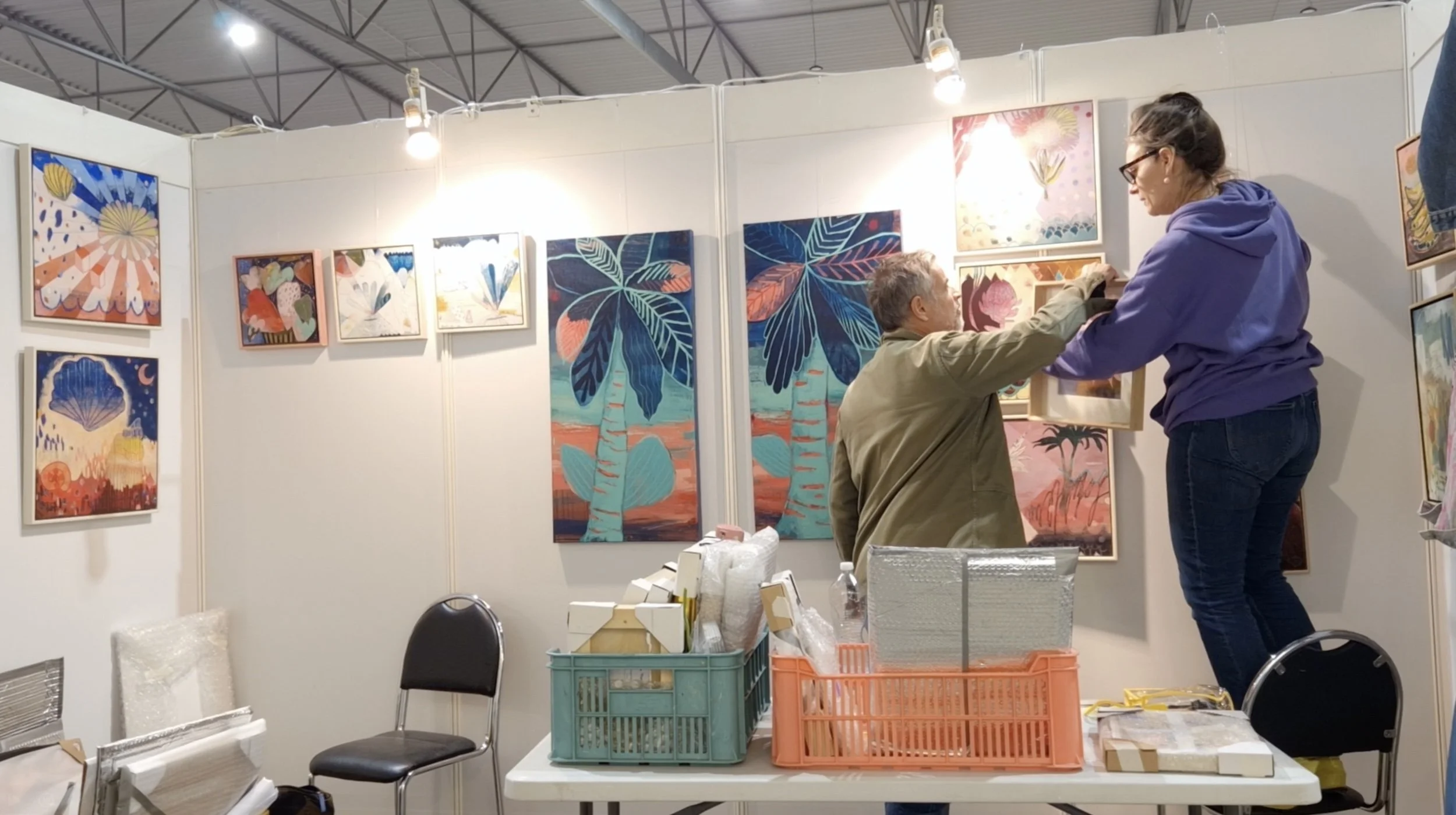
Hanging paintings: the ultimate couple’s workout.
The fair experience
When I first subscribed, I had no idea what to expect: no sales, sell out, critics, success, no visitors — anything was possible.
My main goal was to meet other local artists and see if there was genuine interest in my work locally. On that front, it was a success.
I sold a few pieces, met lovely collectors, and had great conversations with other artists. Talking about studios, materials, and sharing our tricks was inspiring.
The most frequent comment was about my colour palette, people loved how it tied the paintings together, giving the whole booth a bright, joyful energy. Seeing faces light up as people passed my booth was such a reward, I can officially say my paintings are “smile triggers.”
Of course, not everyone loved it, some walked by without a glance, some whispered who-knows-what, but that’s part of the game.
After two days without daylight inside the exhibition hall, I felt drained, especially after unloading everything back at the studio at 9 PM on Sunday. But it was worth it. I’m already on the waiting list for next year, and this time, I’ll leave more room for the unexpected.
5 Tips for Your First Art Fair
If you’re an artist preparing for your first fair, here are a few things this experience taught me:
Plan ahead, but stay flexible. Things will go differently than expected — and that’s okay.
Print plenty of business cards. Don’t be shy about handing them out — that’s why you have them!
Have a QR code for each platform where people can find you — don’t make visitors dig through your website to find your Instagram or YouTube link. Make it easy for them to stay connected!
Accept imperfection. No booth is ever perfect. What matters most is your energy and the story you bring.
Visit other booths. Do it early, before the crowd arrives — 360 artists is a lot to discover! Connecting with other artists was one of my favourite parts of the fair, and I wish I’d had more time for it.


Packed, unpacked, repacked… and a lot of coffee in between.
Reflections & Takeaways
Looking back, it was a challenge I can proudly say I navigated quite successfully. I sold only two paintings, but I came home happy, tired, and full of ideas and new friends.
To all artists balancing a job and a creative life, you have my admiration! I don’t know how some manage kids on top of that. I was lucky to paint after work and on weekends, but it did take a toll on my private life. Still, I’d gladly do two or three events like this per year if I could find them in Prague.
Next time, I’ll also focus on working with fewer formats, two or three max, to make hanging and rearranging easier. Lesson learned!
Next steps
I sold some paintings at the fair and through my mailing list, but a few are still available on mywebsite, along with pieces from my previous collections Mix Tapes and Indian Summer.
If you enjoyed this little dive behind the scenes of the art fair, you might like
My Youtube channelfor inspiration ans tutorials.
My newsletter where I share stories, little sparks of colour and inspiration and early access to new art :
