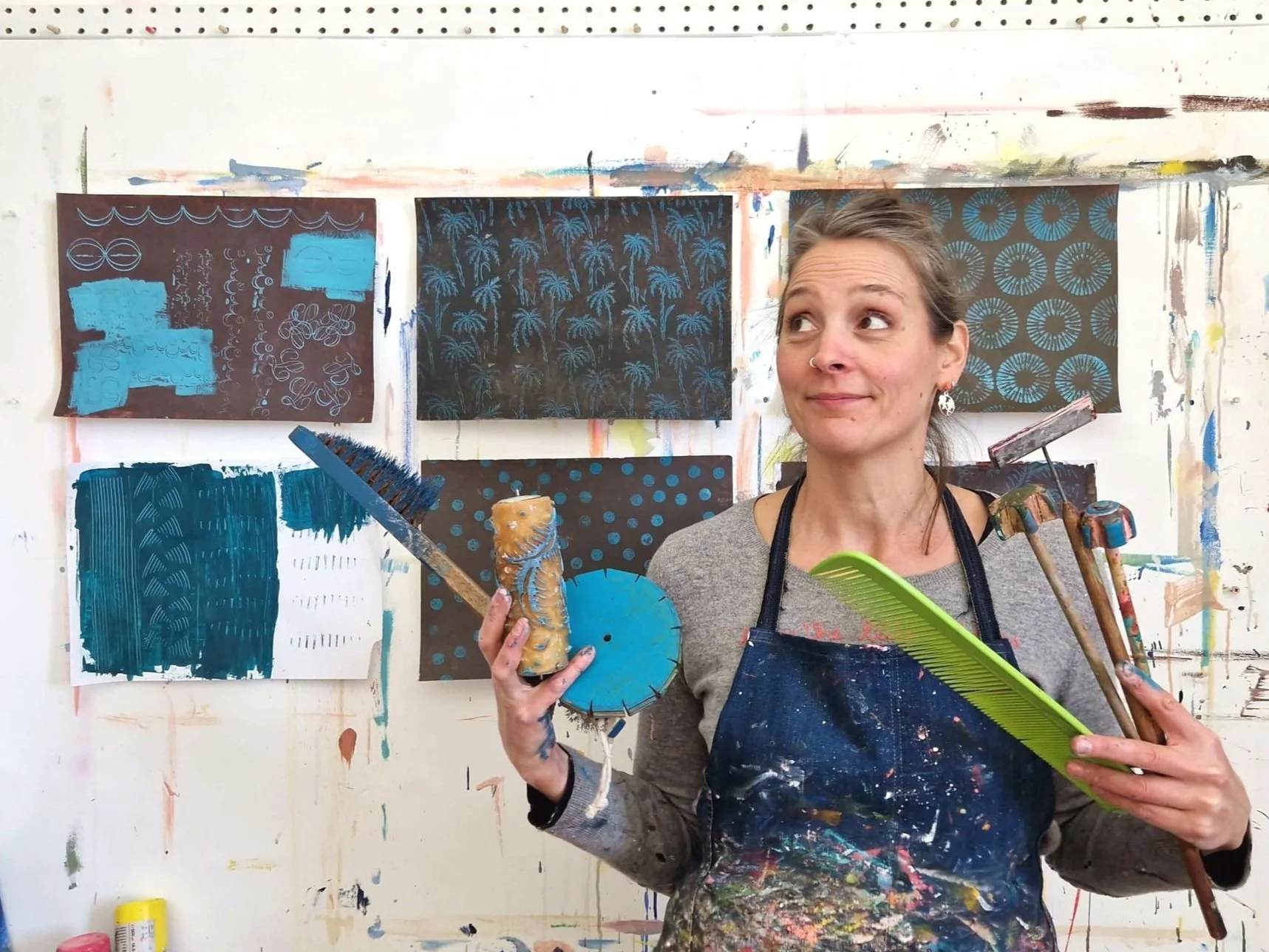
Creative mark making with vintage finds
Be prepared to fall down the rabbit hole of creative possibilities! Literally anything can be used for mark-making – all it takes is a dash of imagination!
The world of antiques and yard sales, brimming with vintage treasures, offers a vast universe of mark-making tools in addition to the usual suspects!
Beyond the thrill of the hunt, vintage finds whisper stories of lives lived. Not only can you find unique items that will create your own special marks on your artworks, but prices can be incredibly affordable. This opens the door to experimentation and exploration without breaking the bank!
Classical art supplies
The first thing I look for when thrifting is classical art supplies—brushes, sketchbooks, coloured pencils, and wax crayons. There’s often a corner in thrift stores where school and art supplies are all piled together. Don’t expect the finest materials, but you might find some real gems. I’ve come across amazing sketchbooks and beautiful boxes of coloured pencils in those very piles.
Pre-loved brushes of all shapes and sizes can be great finds, but it's important to check the bristle quality before buying used ones. A bad brush might lose bristles, and you definitely don’t want that! Similarly, you might come across brayers, squeegees, rulers, compasses, chisels, and all sorts of pencils—they are all there waiting for a new owner to take care of them.
Keep in mind, though, that pencil leads can be broken inside the wood casing, making them impossible to sharpen. But sometimes, just the box is worth it.


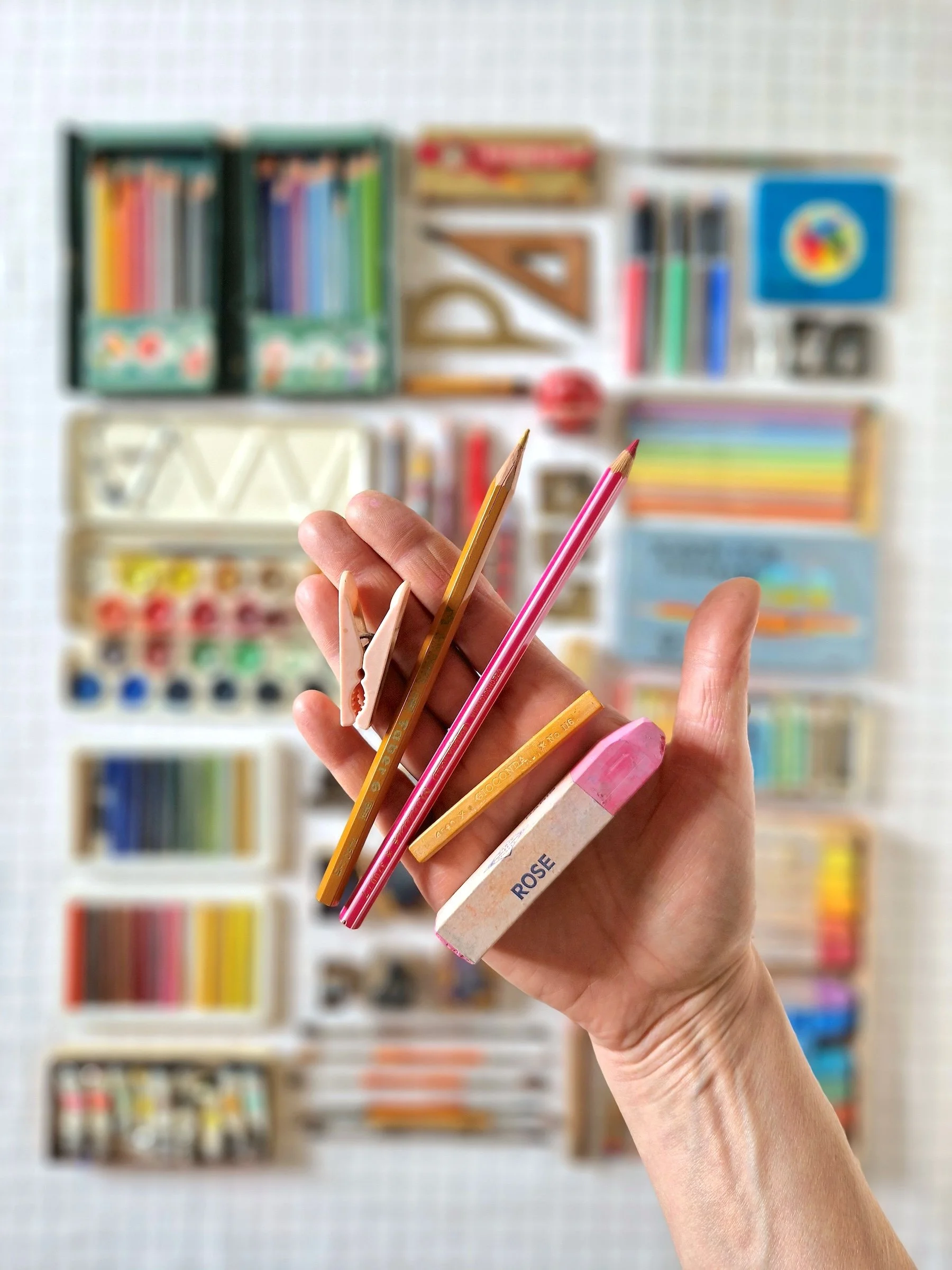
Creative tools from the kitchen
Beyond the usual paintbrushes and palettes, your artistic tools can come from unexpected places.
Kitchens are an excellent playground when it comes to finding unique mark-making tools—and vintage kitchen utensils can hide some true treasures. There are so many possibilities for scraping or applying paint: all kinds of moulds can make beautiful prints, and wooden spoons or spatulas (also great for mixing paint) can leave lovely textures from the wood grain.
Rolling pins are perfect for spreading paint across large surfaces or imprinting patterns. Dough cutters and shapers go far beyond cookies—they’re great for creating bold geometric marks. Icing spatulas can help smooth out mediums or create subtle textures, depending on how you use them.
Newer silicone tools are surprisingly useful too—they make great scrapers or can be used to apply paint much like a silicone wedge.
But my favourites are the odd, forgotten tools that no one really uses anymore. Sometimes it’s hard to even guess what they were originally for—but they often look beautiful, and many of them roll, scrape, or leave the perfect fine line or unexpected print in wet paint.
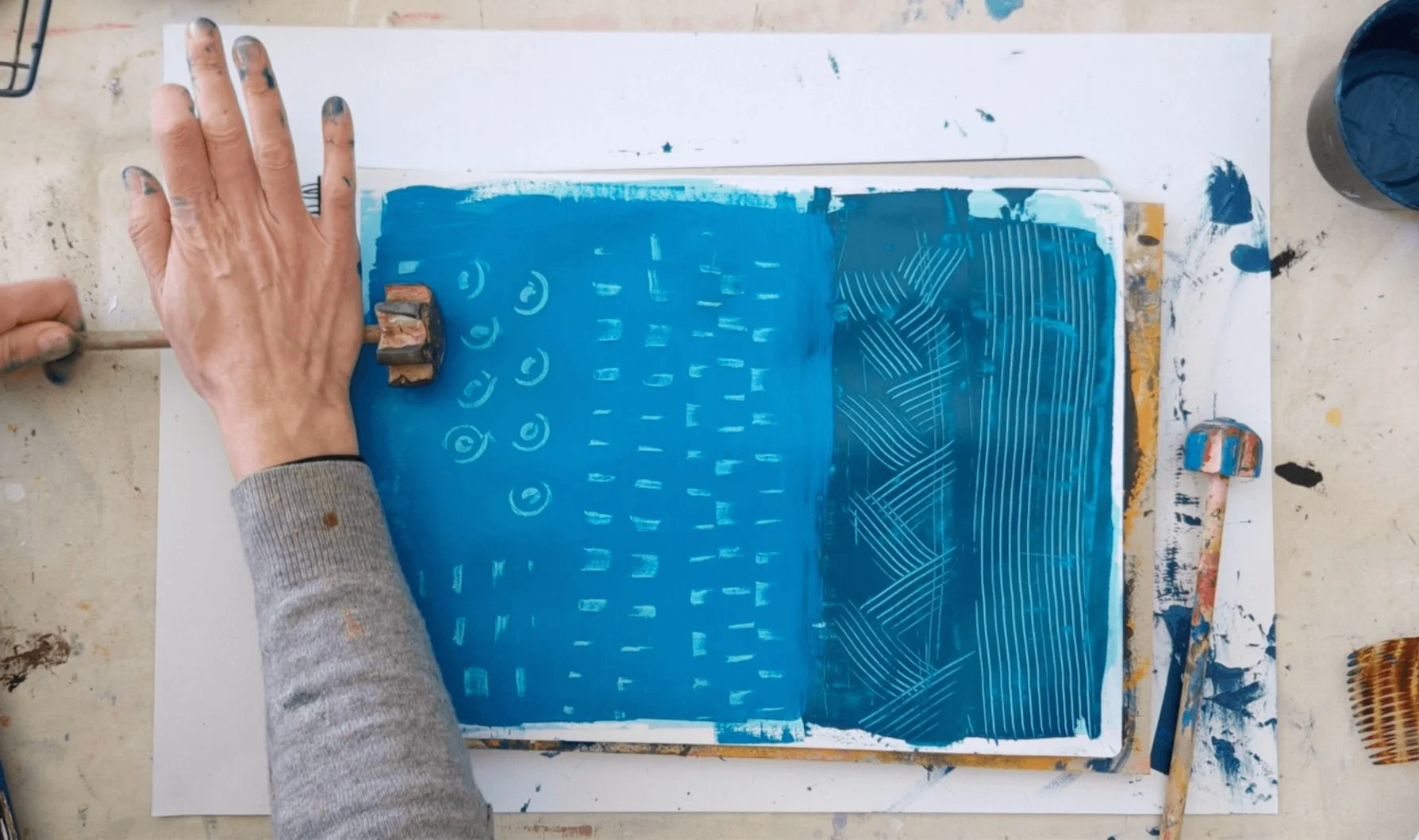
These old Czech wooden whisks have become a favourite in the studio.
Vintage shapes & hidden patterns
Explore flea markets and antique stores with an open mind (and a shopping bag!!).
An old gardening tool might become your go-to scraper for creating distressed effects, or a gear from a clock could be the perfect utensil for adding unique marks.
Lately, I’ve started looking at the bottoms of ceramic and glass containers—and I made the most delightful discovery!
In the Czech Republic, chiselled glass cups, vases, and drinking glasses are a common find, and many have beautifully detailed patterns on their bases. I started printing with them and was instantly hooked!
These make fantastic printing tools. I love experimenting with them to stamp contrasting colours or textures. Some leave very organic, irregular marks, while others create crisp, repeating patterns—each one beautiful in a different way.


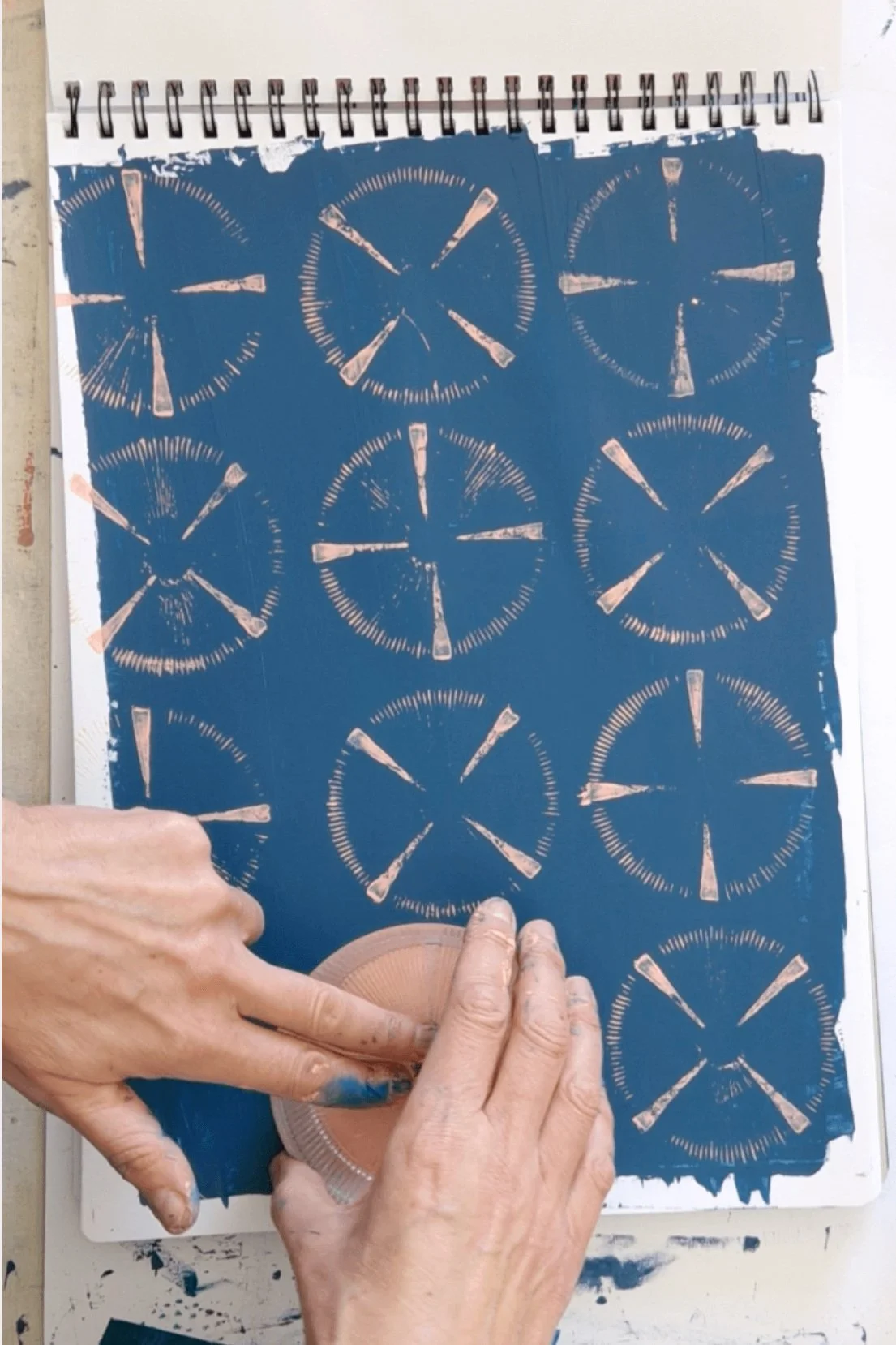
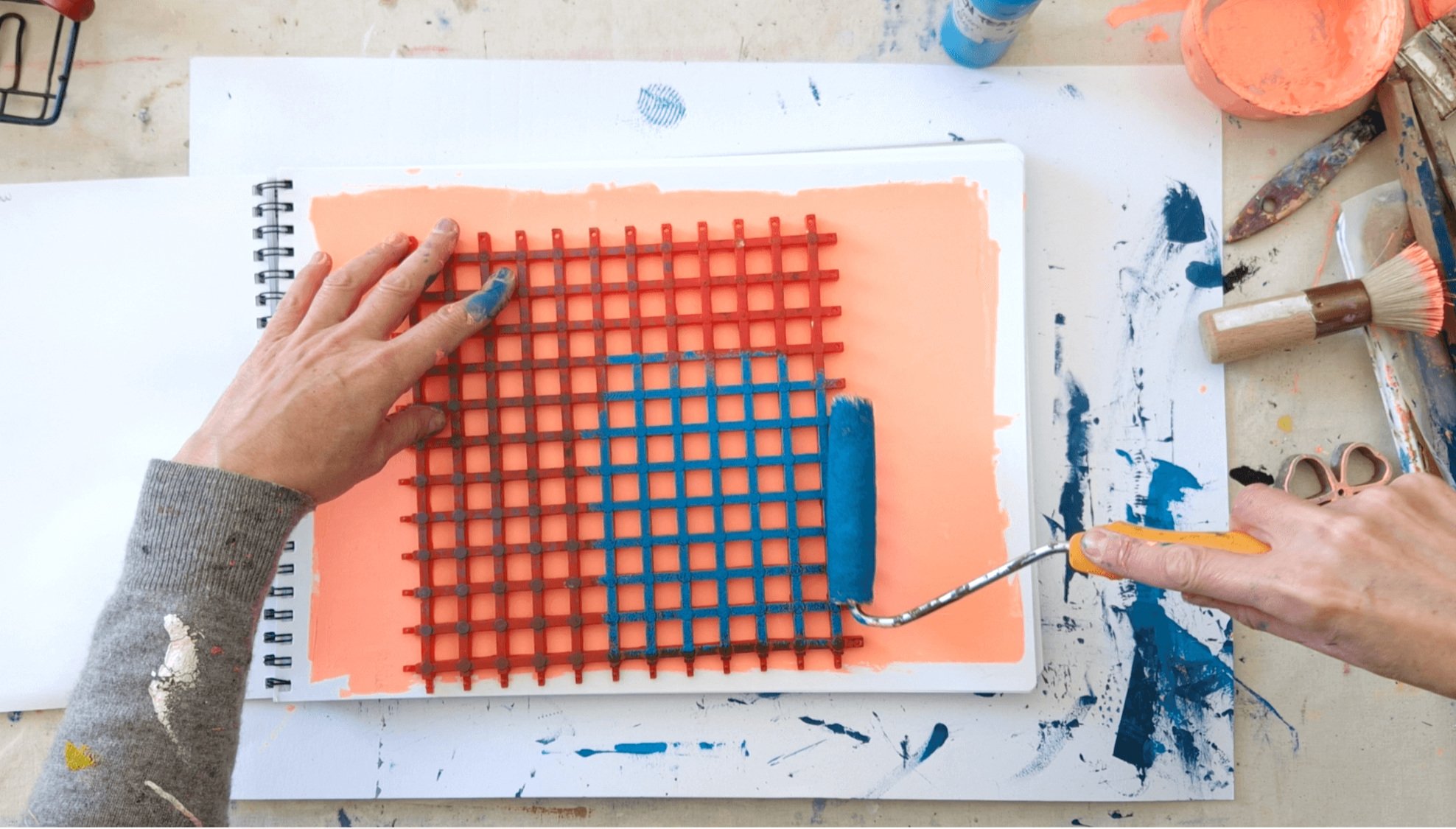
Using an old anti-slip mat to create grid-like prints
Experimentation and technique
Once you've gathered your vintage tools, the next step is experimentation. Each tool offers a distinct mark, and part of the excitement is discovering how they interact with different mediums. For instance, using a rolling pin wrapped with twine can create layered patterns when rolled over a painted surface. Similarly, dipping a comb's teeth into ink and dragging it across paper can yield intricate, repetitive lines.
Consider creating a "mark-making journal" where you dedicate pages to testing each tool. Note the effects produced with varying pressures, angles, and mediums.
Over time, you’ll build up a handy collection of marks, your own little reference library—and you’ll start to get a real feel for what each tool can do.
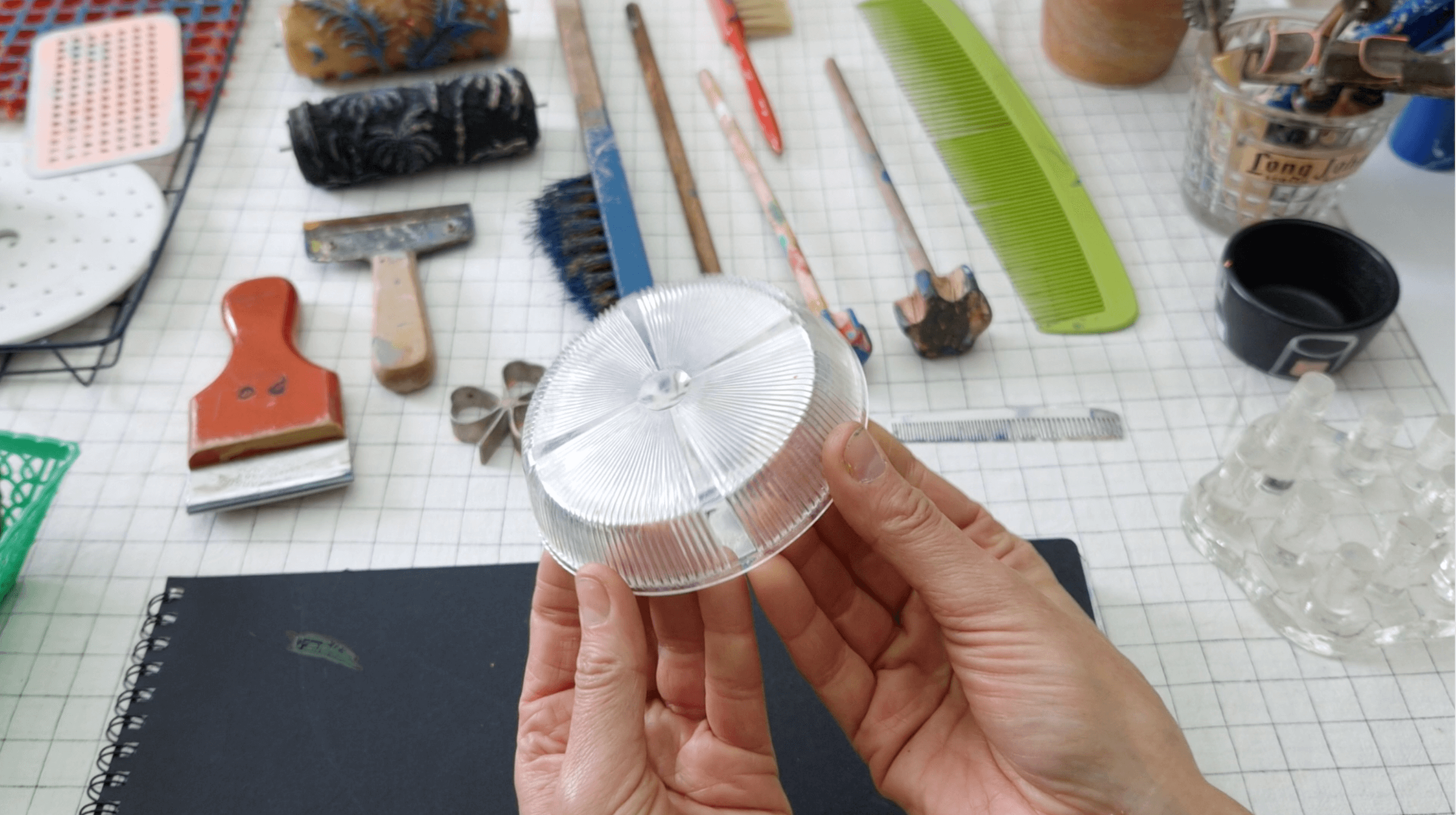
This simple glass cup leaves the most beautiful retro pattern!
Embracing imperfection
One of the joys of using this type of tools is embracing the imperfections they bring.
Unlike modern, mass-produced tools designed for consistency, vintage items often introduce unexpected elements into your work. A slightly bent fork might create uneven lines, or a worn-out brush might surprise you with unpredictable textures. These "flaws" can add character and authenticity to your art, encouraging a more spontaneous and intuitive creative process.


Mark making with vintage finds opens up an endless world of possibilities, and the hunt for second-hand treasures can be a truly inspiring adventure. The unique items you discover are often ones you won’t find anywhere else, sparking new ideas and creative solutions.
The retro charm of these pieces adds an extra layer of enjoyment to the process.
I’d love to hear about your own experiences—what vintage finds have inspired your mark making?
Share your ideas and discoveries in the comments below!
If you enjoyed this:
🎥 Watch more videos on my YouTube channel
💌 Join my newsletter for studio notes & new releases